
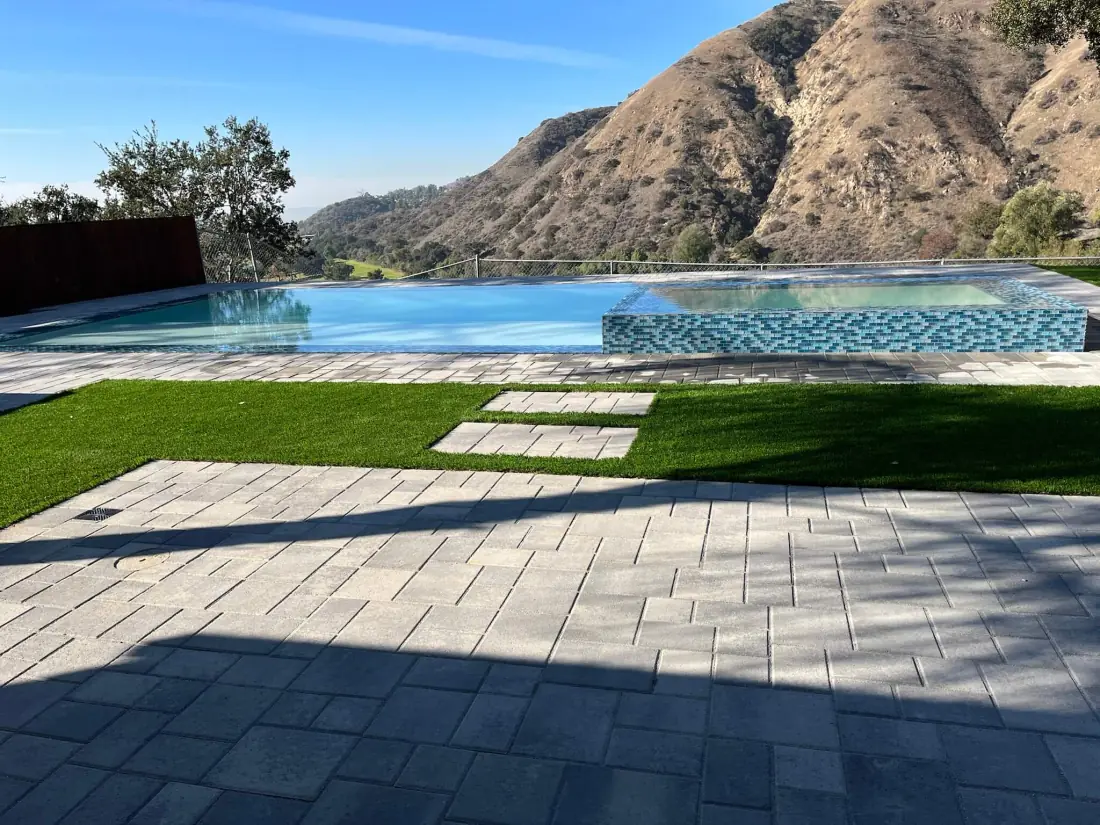
Pool resurfacing in Los Angeles replaces the interior finish that protects the shell. It runs $6,000 to $15,000 and averages about $11,000 per HomeAdvisor’s 2026 data, with plaster lasting 5 to 10 years, quartz 15 to 20 and pebble beyond 20. Plan about five working days on site, plus refilling and balancing.
Work is done by Ran Neuman, who owns Spear Pools, Inc. and brings 18 years of hands-on pool repair and construction experience. Licensed and insured under CSLB #1143895. Free written estimate, and most repairs are scheduled the same week.
“The aesthetic finish on my 50 year old pool and decking was stunning, all the functions upgraded, the drainage gives us a peace of mind.”
★★★★★ Howard Teba, San Fernando Valley, verified Google review
Licensed & Insured · CSLB #1143895 (Spear Pools, Inc.) · Family-Owned, Serving the San Fernando Valley Since 1972 · Free Estimates · We Pull All Permits
Resurfacing covers every interior finish; for plaster specifically, see our pool plaster page.
Resurfacing, Refinishing, Replastering: Is It the Same Job?
Mostly, yes. Resurfacing, refinishing and replastering all mean removing a worn interior finish and applying a new one over the concrete shell. Replastering is the same job when the new finish is standard plaster.
Recoating is different. It usually means rolling a paint or epoxy coating over the old surface. Paint costs less up front but wears out much sooner than a cement-based finish, and it can only go over a surface that is still bonded. At Spear we apply plaster, quartz and pebble finishes, the three that hold up to Valley sun and hard water.
Signs Your Pool Needs a New Surface
A finish rarely fails overnight. It wears in ways you can see and feel:
- Rough spots that scrape feet or snag swimsuits
- Stains that come back after every acid wash
- Gray concrete showing through, especially on steps and benches
- Flaking or hollow-sounding patches where the finish has lost its bond
- Water that is hard to keep balanced because the surface is porous
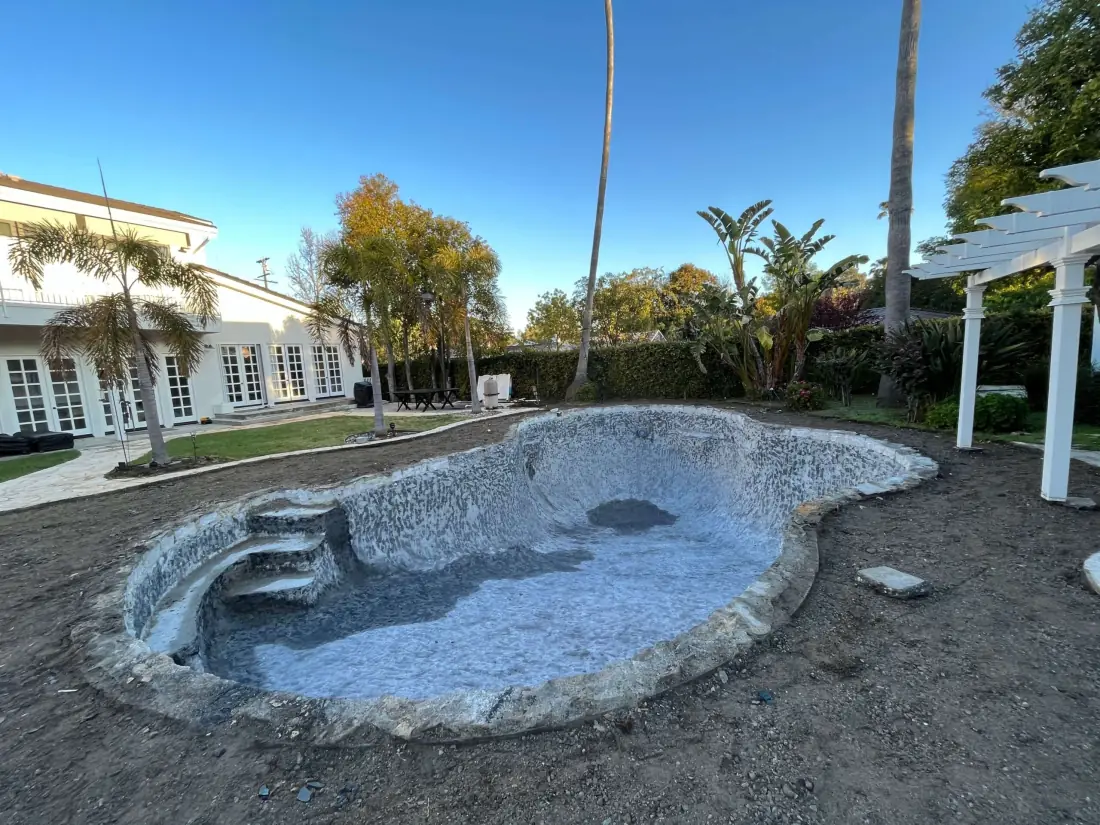
We cover more of these in our list of warning signs your pool needs a new surface.
Choosing a Finish
The finish sets both the price and how long you wait before doing this again. Photos of finished pools are in our pool project gallery, which helps when comparing colors.
| Finish | Typical lifespan |
|---|---|
| Standard plaster | 5 to 10 years |
| Quartz | 15 to 20 years |
| Pebble | 20+ years |
Source: HomeAdvisor; Pebble Technology International (pebble). Your price depends on the pool, access and what we find on site.
- Plaster: the lowest cost and a smooth, classic look. A sensible choice if you plan to sell within a few years.
- Quartz: plaster blended with quartz aggregate. It resists stains and etching better and lasts much longer.
- Pebble: the most durable, with a textured, natural look. It usually costs the least per year of use on a pool you plan to keep.
“I’ve used SPEAR for many years and I’ve never been disappointed. The office is always great and the techs are genius!”
★★★★★ Mark Randall, San Fernando Valley, verified Google review
How Pool Resurfacing Works
- Drain safely. Groundwater pressure under an empty shell can lift a pool out of the ground, so draining is planned around the soil and the water table.
- Remove the old finish. Loose material is chipped out and the whole surface is sounded with a hammer to find hollow spots.
- Repair the shell. Cracks, damaged fittings and hollow areas are fixed before anything new goes on.
- Handle tile and coping. With the pool empty, this is the cheapest time to replace them.
- Apply the finish. The new surface goes on in one continuous day.
- Fill and start up. The pool is filled without stopping, then the water is balanced and brushed daily while the finish cures.
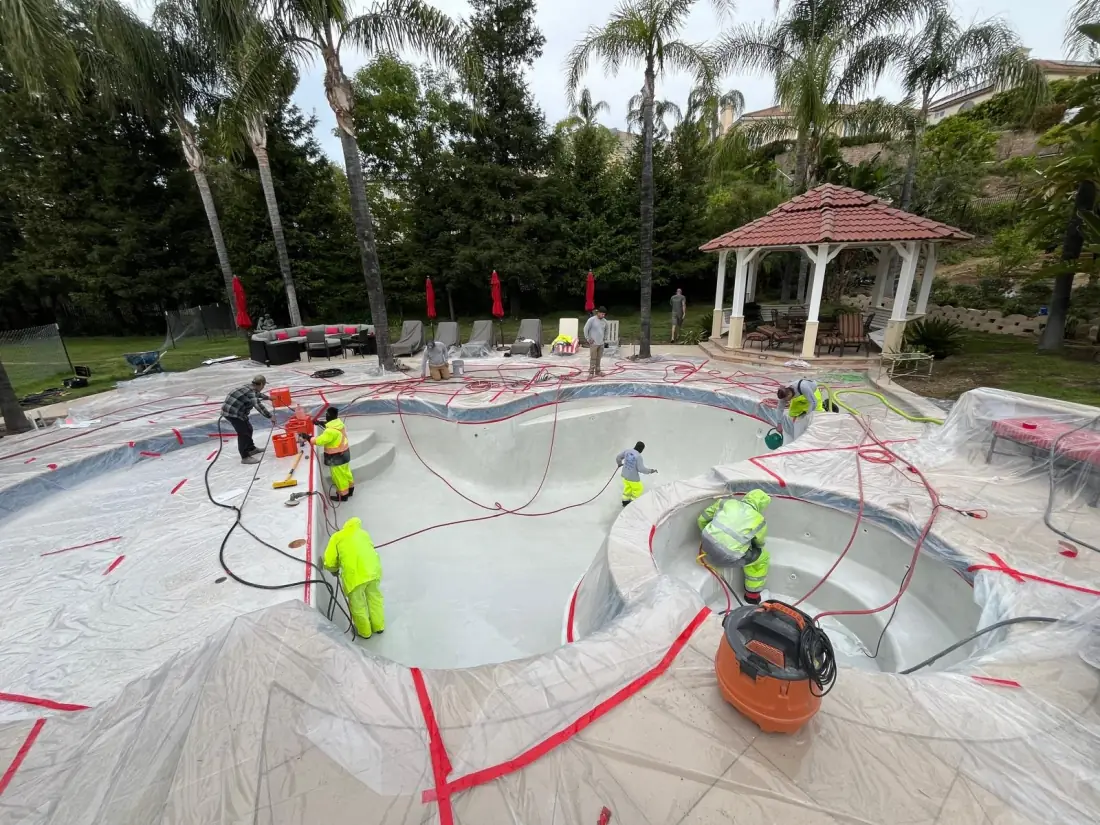
Plan on about five working days on site, according to HomeAdvisor, plus refill and startup time. Because the pool is already drained, many owners also schedule waterline tile replacement in the same project. Cracked or loose cap stones are best handled at the same time by resetting the coping stones.
What Pool Resurfacing Costs
Resurfacing runs $6,000 to $15,000 and averages about $11,000, according to HomeAdvisor’s 2026 data. Four things move the number:
- Surface area. We measure the real surface, including steps and benches, instead of estimating from gallons.
- Finish. Plaster sits at the low end, pebble at the high end.
- Repairs. Hollow spots and cracks found after chipping add to the job.
- Add-ons. Tile, coping and fittings replaced at the same time.
For a size-by-size breakdown, read what plastering costs by pool size.
“Spears was the only who provided me with a written outline of the services to be performed. I made a good decision by hiring them and you will to.”
★★★★★ Ms. Rita Harris, Los Angeles, verified Google review
The Best Time of Year to Resurface
Spring and fall are the easiest seasons. Mild temperatures let the new finish cure evenly, while Valley summer heat can dry fresh plaster too fast.
Timing also affects when you can swim. A pool resurfaced in late fall is ready well before the next season, instead of sitting empty through July. Spring slots fill quickly, so it pays to book the estimate early.
When Resurfacing Is Not the Right Fix
A new finish cannot hold back water that is escaping through broken plumbing or a cracked shell. If the pool is losing water, the leak gets located and repaired first, or the new surface fails early.
Structural cracks that keep moving need engineering, not plaster. And if the shell itself has failed, resurfacing is money spent on a pool that needs rebuilding.
Caring for a New Finish
The first month decides how long the surface lasts. Brush the whole pool daily for the first couple of weeks, keep the water balanced, and avoid adding salt or running automatic cleaners until the finish has cured.
We handle pool resurfacing across Los Angeles, working out of the west San Fernando Valley and covering the Valley, the foothills and the Conejo Valley. See every city and neighborhood we serve.
Get a Free Pool Resurfacing Estimate
Tell us how old the finish is and what it is doing. Estimates are free, and we measure the actual surface area rather than guessing from gallons.
Free visit. Written price. No obligation.
Ready to get the surface sorted? Call (818) 719-9059 and speak to Ran.