
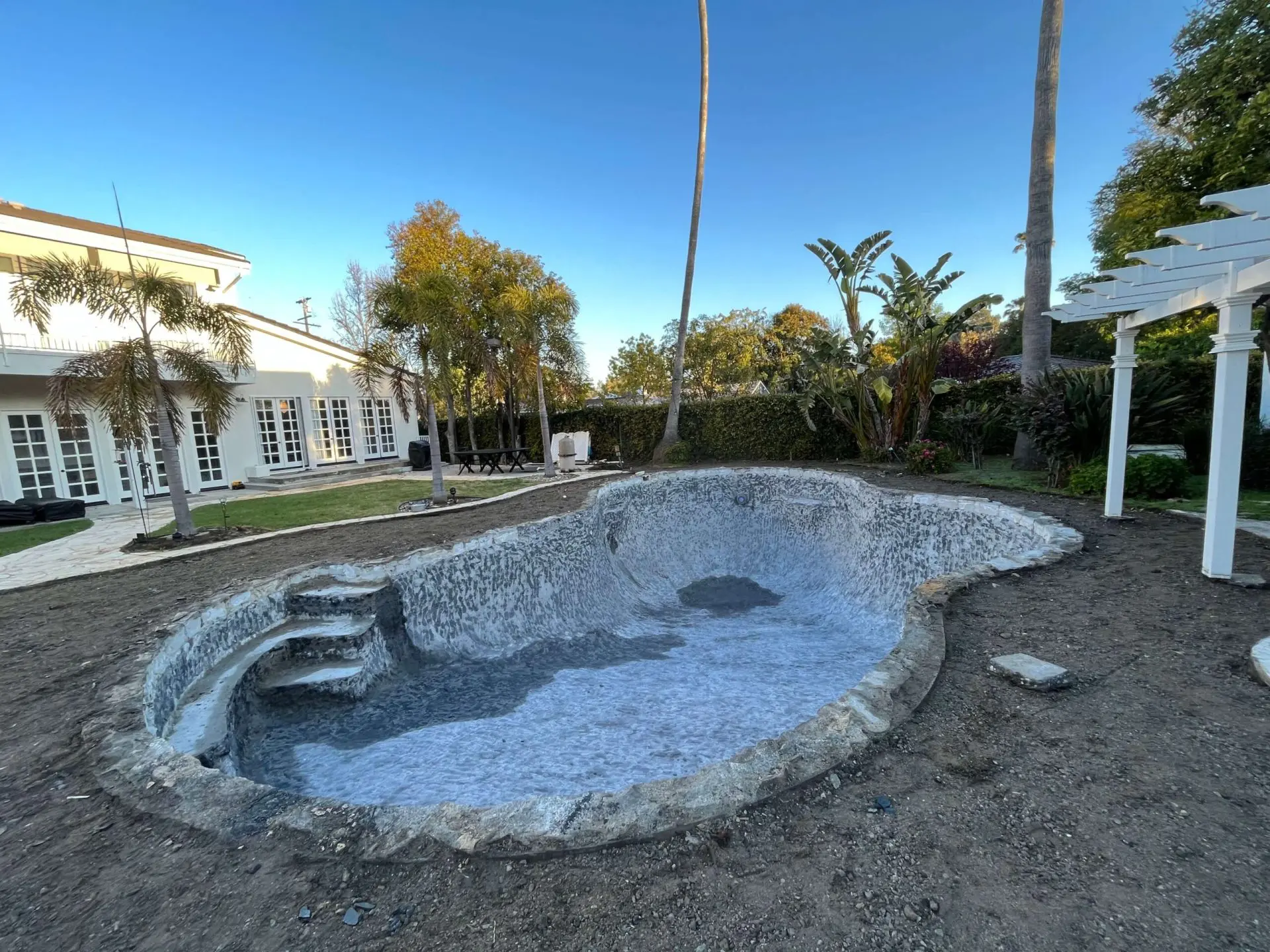
Last updated September 25, 2026
A pool resurfacing project restores the protective finish that keeps a swimming pool durable, safe, and visually appealing.
Short answer: a pool needs resurfacing when the finish is rough underfoot, stains no longer scrub out, or plaster is chipping and exposing the aggregate underneath. Standard plaster lasts about 5 to 10 years, quartz 15 to 20, and pebble more than 20. The nine signs below are the ones that show up first.
Over time, every swimming pool develops surface wear from constant exposure to water, pool chemicals, sunlight, and changing temperatures.
Addressing surface damage early helps extend the life of the pool’s structure, improve swimmer comfort, and reduce the likelihood of costly repairs. It matters most where groundwater complicates a drain, as it does on Lake Balboa pool projects.
Most concrete and plaster pools require resurfacing every 10 to 20 years, depending on the surface material, maintenance routine, and local climate. On the 1960s and 1970s pools behind many Reseda homes we resurface, that first finish is usually well past its life.
If the existing pool surface begins showing signs of deterioration, acting before structural damage develops can save both time and money.
What Is Swimming Pool Resurfacing?
Swimming pool resurfacing is the process of removing or repairing the worn surface layer of a pool and applying a new finish to restore protection, appearance, and durability.
The pool resurfacing process focuses on replacing the finish that seals the pool shell rather than rebuilding the entire pool.
During resurfacing, professionals evaluate the pool’s condition, prepare the existing surface, repair damage, apply a bond coat when necessary, and install a new surface such as pool plaster, aggregate finishes, or glass tiles.
Resurfacing becomes necessary when the pool surface no longer provides adequate protection for the underlying structure.
Rough finishes, cracks, loose plaster, stubborn stains, or recurring leaks often indicate that the surface material has reached the end of its service life.
Replacing the old surface offers several benefits:
- Restores a smooth surface that is comfortable for swimmers
- Improves the pool’s appearance
- Helps prevent water intrusion into the pool shell
- Reduces algae growth caused by porous finishes
- Makes routine cleaning easier
- Extends the lifespan of the entire pool
- Prevents minor issues from becoming costly repairs
Whether the project involves an indoor pool or an outdoor living space centered around an in-ground pool, resurfacing helps protect the investment while improving long-term performance. Sun and hard water are harder on outdoor finishes, which is why the question comes up so often on Van Nuys pool jobs.
9 Warning Signs Your Pool Surface Needs Resurfacing
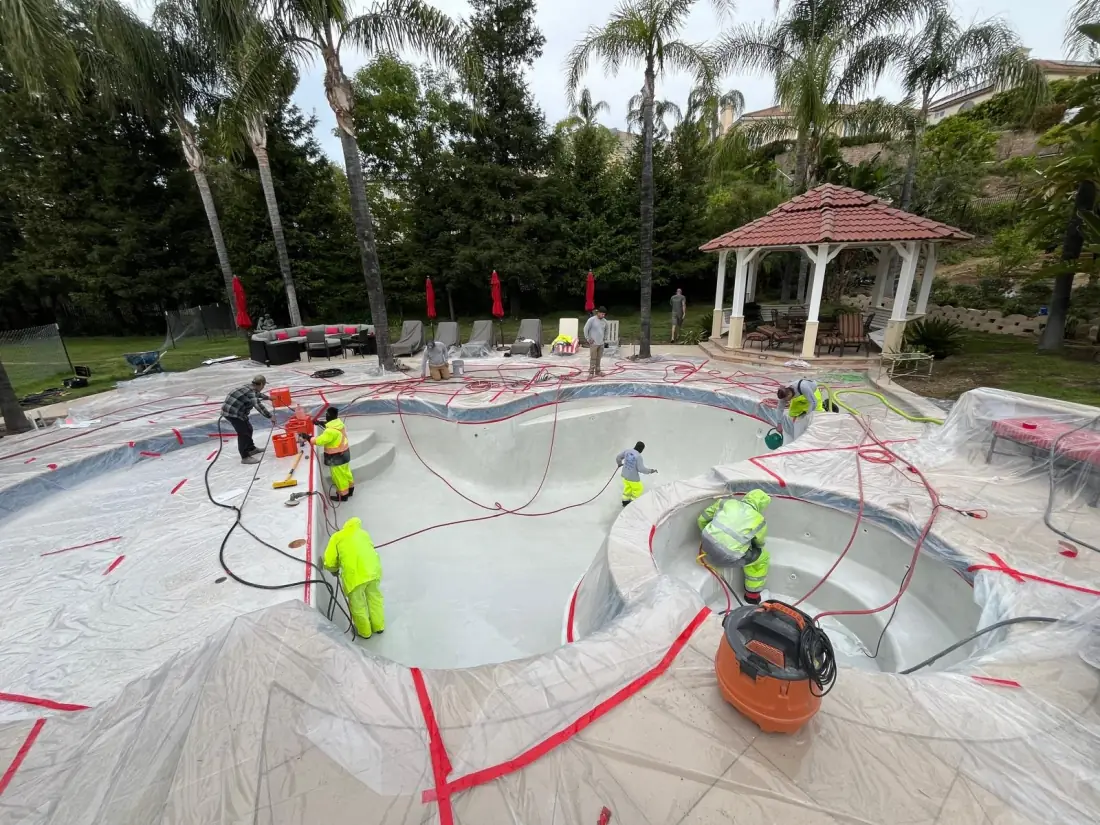
Visible deterioration is usually the first indication that a pool needs resurfacing.
Recognizing these warning signs early allows pool owners to schedule repairs before damage spreads beneath the surface.
1. Rough Surface That Feels Sharp
A rough surface is one of the most noticeable signs of surface deterioration.
Worn plaster gradually exposes coarse materials underneath, creating an abrasive texture that can scrape feet, hands, and knees.
A newly resurfaced pool should feel consistently smooth throughout the entire pool. That is the standard we work back to on Altadena pools coming back into service.
2. Cracks in the Pool Surface
Small cosmetic cracks may develop naturally over time, but larger cracks or expanding fractures deserve immediate attention.
Surface cracks can allow moisture to penetrate deeper into the pool’s structure, increasing the risk of more extensive damage.
A professional inspection helps determine whether cracks affect only the finish or extend into the concrete pool shell.
3. Loose Plaster and Flaking Finish
Loose plaster, peeling coatings, or areas where the surface layer separates from the pool shell indicate bond failure.
As the finish continues breaking apart, additional sections may detach, exposing the underlying structure.
Ignoring loose plaster often leads to a larger resurfacing project later.
4. Persistent Stains That Do Not Clean Away
Rust stains, mineral deposits, algae discoloration, and chemical staining sometimes remain even after proper cleaning or an acid wash.
Persistent staining often means the existing surface has become porous, allowing contaminants to penetrate beneath the finish instead of remaining on top.
5. Increased Chemical Usage
A deteriorating pool finish absorbs more chemicals than a properly sealed surface.
If maintaining proper water chemistry suddenly requires significantly more chlorine, pH adjustment, or balancing products, the pool surface may be contributing to the problem.
Porous finishes also encourage algae growth, making routine maintenance more difficult.
6. Frequent Water Loss
Although evaporation is normal, noticeable water loss may indicate cracks or surface damage, allowing water to escape.
Water loss should always be investigated before assuming resurfacing alone will solve the issue.
Plumbing leaks, damaged fittings, or structural movement may also contribute to water loss. Ruling those out first matters, because a leak traced back to the pad is repair work at the equipment pad and no amount of resurfacing the shell will stop it.
7. Hollow Spots Behind the Surface
During inspections, professionals often tap different areas of the pool surface to identify hollow spots beneath the finish.
These hollow areas suggest the surface material has separated from the pool shell and may eventually break away.
8. Surface Discoloration and Fading
Years of sunlight, chemicals, and water exposure gradually dull older finishes.
While fading alone is primarily cosmetic, severe discoloration combined with roughness or staining usually signals aging surface material.
Installing a new surface restores the pool’s appearance while improving durability.
9. The Finish Has Reached Its Expected Lifespan
Even if no major problems appear, age remains an important factor.
Typical lifespan estimates include:
| Pool Finish | Average Lifespan |
|---|---|
| Traditional pool plaster | 7 to 10 years |
| Premium plaster | 10 to 15 years |
| Quartz aggregate finishes | 10 to 15+ years |
| Pebble finishes | 15 to 25+ years |
| Glass tile | 20 to 25+ years |
| Fiberglass gelcoat | Up to 20 years |
| Acrylic paint | 2 to 5 years |
| Epoxy paint | 5 to 8 years |
Proper maintenance, balanced water chemistry, and routine inspections can extend these estimates, but every pool finish eventually requires replacement.
If several of these warning signs appear together, resurfacing a pool sooner rather than later usually prevents more extensive structural repairs and helps preserve the pool’s long-term value.
Pool Resurfacing Process Overview
The pool resurfacing process typically takes 5 to 14 days, depending on the pool type, chosen finish, weather conditions, and the amount of surface repair required.
While every resurfacing project is different, most follow the same sequence to ensure the new surface bonds properly and lasts as long as possible.
The typical pool resurfacing process includes:
- Drain the swimming pool safely.
- Inspect the pool shell and plumbing components.
- Remove the old surface material.
- Prepare the existing surface with cleaning and repairs.
- Apply a bond coat if required.
- Install the new pool finish.
- Allow the finish to cure.
- Refill the pool water slowly.
- Balance water chemistry before swimming.
Permits may be required for certain renovation projects, especially when structural repairs, plumbing modifications, or electrical work are involved.
Safety barriers and proper drainage procedures also help protect the surrounding pool area throughout the project.
Pre-Work and Inspection
A thorough inspection identifies hidden issues before a new surface is installed. Skipping this step can shorten the lifespan of the resurfaced pool.
The first task is usually draining the pool using approved methods that prevent hydrostatic pressure from damaging the pool shell. Once empty, professionals inspect every visible surface.
During the inspection, they typically examine:
- Structural cracks
- Hollow or delaminated plaster
- Loose plaster
- Rust stains around fittings
- Expansion joints
- Plumbing penetrations
- Main drains and returns
- Waterline tile condition
- Signs of previous repairs
Concrete pools and older in-ground pool structures often require additional evaluation to ensure the shell remains sound before resurfacing begins.
Surface Preparation and Removal
Proper surface preparation is one of the most important factors in a successful pool resurfacing project.
Even the highest-quality materials cannot perform well if applied over a failing existing surface.
Depending on the pool’s condition, professionals may use:
- Chipping hammers
- Diamond grinders
- Abrasive blasting equipment
- Pressure washing
- Acid washing (when appropriate)
The goal is to remove loose plaster, deteriorated coatings, dirt, algae, calcium deposits, and any unstable surface material.
After cleaning, cracks and damaged areas are repaired before a bond coat is applied.
A bond coat improves adhesion between the existing surface and the new finish, helping prevent future delamination.
Surface preparation also ensures the new layer maintains a consistent thickness across the entire pool.
Applying a New Pool Finish
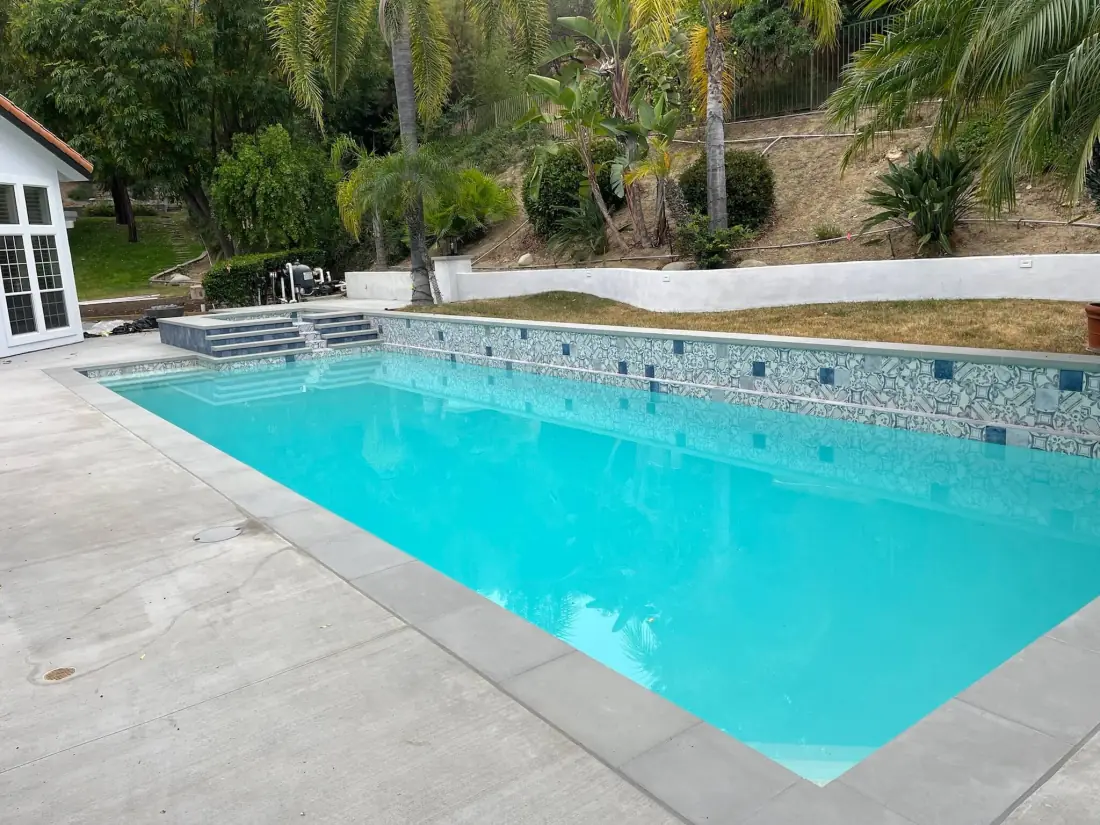
Choosing the right pool finish affects durability, maintenance requirements, appearance, and long-term costs.
The best option depends on the pool type, budget, and desired look.
Common pool resurfacing options include:
Pool Plaster
Pool plaster remains one of the most popular choices for concrete pool resurfacing.
Made from cement and marble sand, plaster creates a smooth, clean appearance and is generally the most cost-effective option for resurfacing a pool.
Benefits include:
- Smooth swimming surface
- Lower installation costs
- Classic appearance
- Easy repairs
With proper maintenance, pool plaster typically lasts around 10 to 15 years.
Aggregate Finishes
Aggregate finishes combine cement with premium materials such as quartz, exposed pebble, or glass beads.
Compared to traditional plaster, these finishes offer:
- Better durability
- Greater stain resistance
- Improved texture
- Longer service life
- More color options
Quartz aggregate generally lasts 10 to 15 years, while pebble finishes often exceed 20 years with proper care.
Although aggregate finishes have a higher upfront cost, many pool owners choose them because of their durability and lower long-term maintenance needs.
Glass Tile Installations
Glass tiles provide one of the longest-lasting and most visually striking pool finishes.
They are commonly installed as:
- Waterline tile
- Accent features
- Full-tile pool interiors
Advantages include:
- Exceptional durability
- Excellent stain resistance
- Minimal fading
- Luxurious appearance
- Easy cleaning
However, glass tile installations require precise workmanship, proper waterproofing, and careful grout application to achieve long-lasting results.
Curing, Refill, and Chemical Balancing
The curing process is just as important as installing the new finish.
Improper startup procedures can permanently damage a new surface before the pool is ever used.
After installation, the finish cures according to the manufacturer’s recommendations.
Different surface materials have different curing times, but rushing this stage may weaken the finished surface.
When curing is complete:
- Refill the pool continuously without stopping the water flow.
- Avoid exposing fresh plaster to partial water levels.
- Begin balancing the pool water immediately after filling.
- Maintain proper water chemistry throughout the first several weeks.
Proper water chemistry helps protect the new surface while reducing scaling, staining, and early surface deterioration.
Resurfacing Concrete Pools and Pool Plaster Options
Concrete pools offer the greatest flexibility when selecting a new surface material. Unlike fiberglass or vinyl pool systems, concrete pools can be resurfaced using several different finishes depending on budget and performance goals.
Common resurfacing options include:
| Surface Material | Best For | Typical Lifespan |
|---|---|---|
| Standard pool plaster | Budget-friendly renovations | 7 to 10 years |
| Premium plaster | Improved durability | 10 to 15 years |
| Quartz aggregate | Better stain resistance | 10 to 15+ years |
| Pebble finishes | Premium durability | 15 to 25+ years |
| Glass tile | Luxury installations | 20 to 25+ years |
Pool replastering involves removing deteriorated plaster and replacing it with a fresh plaster layer.
In some situations, localized patch repairs combined with a bond coat may be sufficient before applying the final finish.
The right resurfacing option depends on the pool’s condition, desired appearance, maintenance expectations, and overall renovation budget.
Plaster Removal and Replastering Steps
Pool replastering restores a worn concrete pool by replacing deteriorated plaster with a durable new finish.
The goal is to create a smooth, watertight surface that protects the pool shell for years to come. Homeowners who need only the interior replaced, with the tile and coping left in place, are looking at pool replastering rather than a full renovation.
The process begins by removing the old plaster until a sound substrate is exposed.
Any cracks in the gunite or shotcrete shell are repaired before the new layer is installed.
A typical replastering process includes:
- Remove all loose plaster and damaged material.
- Inspect the exposed pool shell.
- Repair structural cracks and voids.
- Clean the surface thoroughly.
- Apply a bond coat when required.
- Trowel the new pool plaster evenly across the entire pool.
- Begin the curing process according to manufacturer recommendations.
Proper workmanship during replastering helps reduce future cracking, discoloration, and premature surface wear.
Aggregate Finishes (Pebble, Quartz, and Glass Beads)
Aggregate finishes combine cement with decorative materials to create a stronger, longer-lasting pool finish than standard plaster.
Popular aggregate finishes include:
- Quartz: A smooth finish with improved stain resistance and a lifespan of approximately 10 to 15 years.
- Exposed Pebble: Natural stone creates a textured, durable surface that often lasts 15 to 25 years or more.
- Glass Beads: Reflective beads add visual depth while creating a smooth, premium appearance.
Compared with traditional plaster, aggregate finishes generally:
- Resist algae growth more effectively
- Offer better stain resistance
- Reduce long-term maintenance
- Maintain their appearance longer
- Increase overall durability
Most aggregate finishes are installed in a uniform layer before being exposed, polished, or washed to reveal their decorative texture.
Glass Tile Applications
Glass tile is one of the most durable and visually striking pool finish options available.
Although it has a higher initial cost, its longevity often makes it an attractive long-term investment.
Many pool owners choose glass tile only for the waterline, while others install it throughout the entire pool for a luxury appearance. Waterline work on its own is usually handled as a waterline tile job, which costs far less than refinishing the whole interior.
Benefits include:
- Exceptional durability
- Fade-resistant colors
- Easy cleaning
- Low water absorption
- Long service life
Proper grout selection and periodic regrouting help preserve the appearance and structural integrity of tiled surfaces.
Fiberglass Pool Resurfacing
Fiberglass pool resurfacing differs from concrete pool resurfacing because the structural shell remains intact while the protective gelcoat is restored.
Common signs that a fiberglass pool needs resurfacing include:
- Blistering
- Osmosis damage
- Surface chalking
- Fading
- Cracks in the gelcoat
The resurfacing process typically involves removing the failing gelcoat, repairing damaged areas, preparing the surface, and applying a new gelcoat using specialized equipment.
Fiberglass finishes can last up to 20 years when properly installed and maintained.
Pool Paint and Acrylic Paint Options
Paint provides a short-term resurfacing solution but generally requires more frequent maintenance than plaster or aggregate finishes.
Two common choices include:
Acrylic Paint
Acrylic paint offers a smooth finish and relatively simple application. It works well for older painted pools but usually lasts only 2 to 5 years before repainting becomes necessary.
Epoxy Paint
Epoxy paint creates a harder, more durable coating than acrylic paint. When applied correctly, it may last 5 to 8 years and resists chemical damage better than standard pool paint.
Before applying any paint:
- Remove loose coatings.
- Repair damaged areas.
- Clean the existing surface thoroughly.
- Follow manufacturer drying and curing recommendations.
Paint can be a cost-effective option, but it generally does not provide the longevity of plaster, aggregate finishes, or tile.
Pool Deck Resurfacing and Pool Deck Options
Pool deck resurfacing improves both safety and appearance while complementing a newly resurfaced swimming pool.
Before resurfacing begins, inspect the pool deck for:
- Cracks
- Uneven settling
- Drainage problems
- Surface wear
Popular pool deck finishes include:
- Textured concrete coatings
- Stamped concrete
- Natural stone
- Decorative overlays
- Cool-deck finishes
Coordinating deck resurfacing with the pool resurfacing project creates a more consistent finished appearance and minimizes future disruption. Where the slab is cracked or settling rather than simply worn, a pool deck rebuild is the better call, because a coating applied over moving concrete will telegraph the same cracks within a season.
Cleaning, Acid Wash, and Tile Care
Cleaning methods depend on the condition of the pool surface and the type of finish being maintained.
An acid wash may help remove stubborn stains and mineral buildup from certain plaster surfaces, but it should only be performed when necessary because repeated acid washing gradually removes surface material.
When muriatic acid is used:
- Wear proper protective equipment.
- Follow manufacturer safety recommendations.
- Neutralize waste according to local regulations.
For routine maintenance, clean the waterline tile using products designed for the specific tile material to avoid damaging grout or decorative finishes.
Cost, Lifespan, and Return on Investment
Pool resurfacing costs vary based on pool size, finish type, labor requirements, and local market conditions.
Typical industry ranges include:
| Finish Type | Typical Cost | Average Lifespan |
|---|---|---|
| Plaster | $3–$5 per square foot | 7 to 15 years |
| Aggregate | $5–$8 per square foot | 12 to 25 years |
| Tile | $8–$15 per square foot | Up to 25 years |
| Vinyl liner replacement | $1–$3.50 per square foot | 5 to 9 years |
For reference, resurfacing a 1,000-square-foot pool commonly costs around $6,500, although actual pricing varies depending on materials, repairs, and regional labor costs. Access moves that number as much as the finish does, so homeowners comparing quotes for pool resurfacing in West Hills should have the route to the pool priced alongside the surface itself.
Resurfacing extends the life of the pool, improves the pool’s appearance, and helps prevent costly structural repairs that can occur when surface deterioration is ignored.
DIY Versus Hiring a Professional for Pool Resurfacing
Most pool resurfacing projects require specialized equipment, technical expertise, and careful timing, making professional installation the preferred choice.
DIY resurfacing may seem less expensive, but it often requires:
- Surface grinders
- Plaster mixers
- Spray equipment
- Concrete repair tools
- Chemical balancing knowledge
Improper surface preparation or installation can lead to premature failure, uneven finishes, leaks, or warranty issues.
Professional installation also provides access to quality materials, experienced workmanship, and manufacturer-supported installation practices.
Choosing a Contractor and Warranties
Selecting the right contractor helps ensure the resurfacing project delivers long-lasting results.
Before hiring a contractor:
- Verify licensing and insurance.
- Request detailed written estimates.
- Review previous resurfacing projects.
- Compare warranty coverage.
- Ask about the materials being installed.
- Confirm the expected project timeline.
A comprehensive estimate should clearly outline labor, materials, preparation work, repairs, cleanup, and warranty exclusions.
Frequently Asked Questions About Pool Resurfacing
How often does pool resurfacing need to be done?
Pool resurfacing is needed every 5 to 20 years, and the finish decides where a pool lands in that range. Standard plaster lasts about 5 to 10 years, quartz 15 to 20, and pebble more than 20 with balanced water. Sun, heavy use and hard water shorten every one of those numbers. The honest answer for any individual pool is that the surface tells you: once plaster feels rough underfoot and stains stop scrubbing out, it has reached the end of its service life.
Is pool resurfacing the same as pool replastering?
Pool resurfacing and replastering are not the same thing. Replastering means applying new plaster, the most common and least expensive finish. Resurfacing is the broader term, and it also covers quartz and pebble finishes that cost more and last longer. Every replaster is a resurface, but not every resurface uses plaster. The work is the same either way: drain the pool, chip out the old surface, apply a bond coat, then the new finish, then refill and balance the water.
How long does pool resurfacing take?
Pool resurfacing takes about 5 to 14 days from drain to refill. HomeAdvisor puts the surface work itself at roughly five working days, and the rest of the time goes to draining, chipping out the old finish, curing and refilling. Weather stretches it, since a new finish cannot cure evenly in extreme heat or rain. Repairs found once the pool is empty, such as cracks or failed plumbing, add days because they have to be fixed before the finish goes on.
Can you swim immediately after resurfacing?
You cannot swim immediately after resurfacing. The pool is refilled within hours of the finish going on, but the surface keeps curing for weeks, and the water chemistry has to be brought into balance first. Plaster takes about 7 to 28 days to cure fully. During the first couple of weeks the pool gets brushed daily and the water is tested often, which is what prevents staining and a rough surface later. Your contractor should give you that start-up schedule in writing.
See Finished Resurfacing Work
Seeing the same pool before and after settles the choice between finishes faster than reading about it does. Photographs of completed projects are in the gallery.
Conclusion
Pool resurfacing is more than a cosmetic upgrade. It protects the pool shell, improves swimmer safety, and extends the life of your swimming pool.
Whether your pool has rough plaster, stubborn stains, loose finishes, or visible cracks, addressing these warning signs early can prevent more extensive repairs in the future.
Choosing the right surface material, following proper installation practices, and maintaining balanced water chemistry will help ensure your resurfaced pool delivers years of reliable performance and enhances your outdoor living space.