
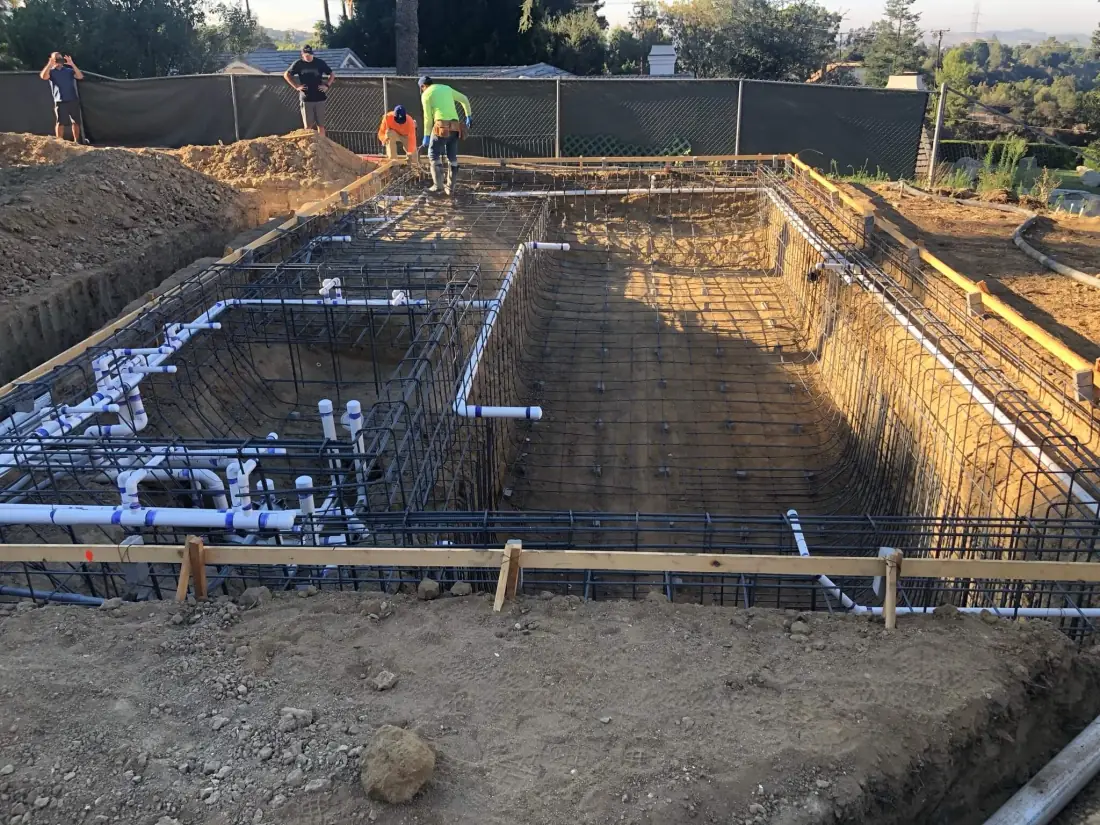
Pool plumbing repair in Los Angeles covers the suction and return lines, skimmer throats, valves and the fittings at the pad. In-ground leak repair runs $350 to $2,700 per HomeAdvisor’s 2026 data, depending on whether the fault is a fitting or a buried line. We locate the leak before quoting the repair.
Work is done by Ran Neuman, who owns Spear Pools, Inc. and brings 18 years of hands-on pool repair and construction experience. Licensed and insured under CSLB #1143895. Free written estimate, and most repairs are scheduled the same week.
“Richard was able to properly diagnose the problem within minutes, had the part in his truck, and completed the repair faster than I expected.”
★★★★★ Raffi C. Donoyan, Los Angeles, verified Google review
Licensed & Insured · CSLB #1143895 (Spear Pools, Inc.) · Family-Owned, Serving the San Fernando Valley Since 1972 · Free Estimates · We Pull All Permits
This page covers repairs. If your pool needs its lines fully replaced, see our pool re-piping service.
Is Your Pool Actually Leaking?
Every pool loses some water to evaporation, and a hot, windy Valley week can take a noticeable amount. Before paying for leak work, it is worth ruling that out.
The bucket test takes one day:
- Set a bucket on the pool steps and fill it until the water inside matches the pool level.
- Mark both water lines, one inside the bucket and one on the pool tile.
- Run the pump on its normal schedule and wait 24 hours.
- Compare. If the pool dropped noticeably more than the bucket, the extra loss is a leak.
Run it once with the pump on and once with it off. A bigger drop with the pump running points to the pressure side, meaning the return lines. A bigger drop with it off points to the suction lines or the shell.
How We Find the Leak Before We Dig
Digging in the wrong spot is the most expensive mistake in pool plumbing repair. So the repair starts with locating the leak.
Each line is isolated and pressure-tested on its own: the skimmer lines, the main drain and the returns. The line that will not hold pressure is the one losing water. Fittings, skimmer throats and light niches get checked for leaks at the shell.
Once the leak is pinned down, Spear gives you a written price for the repair itself, not an open-ended dig. Homeowners describe the process in reviews of our work.
Common Pool Plumbing Problems
Most calls fall into a few patterns, and the symptom usually tells us where to look first.
| What you notice | Likely cause | Usual fix |
|---|---|---|
| Water level drops more than about 1/4 inch a day | Leak in a buried line, fitting or shell | Leak detection, then a targeted repair |
| Air bubbles from the returns | Suction-side leak letting air in | Reseal or replace the leaking fitting |
| Wet ground or soft deck near the pad | Cracked pipe or failed union | Excavate and replace the section |
| Weak flow with a clean filter | Blocked or collapsed line | Clear the line or re-pipe it |
Source: HomeAdvisor, 2026 cost data (in-ground leak repairs run $350 to $2,700). Your price depends on the pool, access and what we find on site.
- Skimmer throat leaks: the skimmer separates slightly from the shell as the ground moves. It can often be sealed without digging.
- Suction-side air leaks: a loose union or cracked fitting lets air into the pump, which loses prime and runs hot.
- Return line leaks: water escapes under pressure, so the soil around the pool stays wet.
- Failed valves: worn diverter valves send water the wrong way or leak at the stem.
Repairing a Buried Pipe
When the leak is in a buried line, we open the smallest area of deck or soil that reaches it, cut out the damaged section and replace it with new pipe. The repaired line is pressure-tested before it is covered again, then the deck is patched. Where the slab around the patch is already cracked or lifting, it is worth pricing pool deck repair at the same time.
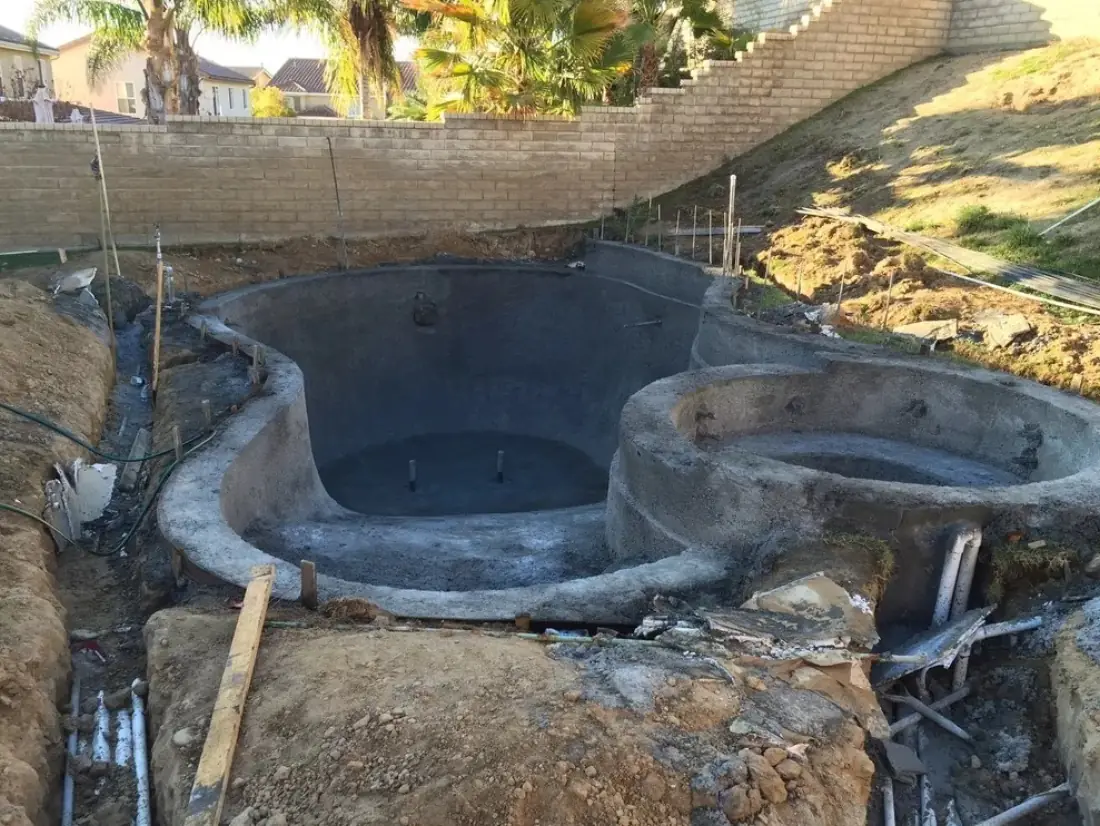
In-ground leak repairs run $350 to $2,700, according to HomeAdvisor’s 2026 data. What moves the price is depth, what sits on top of the pipe (soil, concrete or pavers), and how far the pipe runs from the pool.
Leaks at the Equipment Pad
Not every leak is underground. Unions, valve O-rings, filter drains and pump seals at the pad leak too, and those fixes are quick. Pad-side faults fall under equipment repair work, and we often handle both on the same visit.
“More competent than 90% of pool men. Pool men mostly don’t understand nor diagnose problems correctly. Also Spear wires stuff better”
★★★★★ j g., Woodland Hills, verified Yelp review
Older equipment connected to that plumbing is worth saving when parts still exist.
“Our 32 year old waterfall pump was a challenge but he found parts for it, savings us big $$ if we had to get a new pump.”
★★★★★ Eric V., Los Angeles, verified Yelp review
What to Do Until the Repair
A leaking pool can usually wait a few days, as long as you protect the pump.
- Keep the water above the middle of the skimmer opening. If it drops below, the pump pulls air and can run dry.
- If the pump keeps losing prime, turn it off rather than letting it run empty.
- Note the water level each morning. That record helps show which line is leaking.
- Look for wet soil, sinking pavers or new deck cracks, and tell us where they are.
When a Repair Is Not Enough
One leak on otherwise healthy pipe is a repair. Repeated leaks on old galvanized or brittle early plastic lines are a sign the whole run is failing, and patching it again only delays the bigger job.
That is when re-piping makes sense, especially if a remodel already has the deck open. Weighing doing it yourself? We compared a contractor against a DIY job.
Soil, Trees and Buried Lines
Local ground conditions decide how hard life is on pool plumbing. Ground that holds moisture is hard on buried lines, which makes Lake Balboa leak repair a frequent call.
Root movement under oaks drives leak work in Thousand Oaks. On hillside lots, slow soil movement stresses fittings where the pipe meets the shell.
We handle pool plumbing repair across Los Angeles, working out of the west San Fernando Valley and covering the Valley, the foothills and the Conejo Valley. See every town and city we cover.
Get a Free Pool Plumbing Estimate
Tell us how much water you are losing and how fast. Estimates are free, and most repairs are scheduled the same week.
Free visit. Written price. No obligation.
Losing water and not sure where it is going? Call (818) 719-9059 and speak to Ran.