
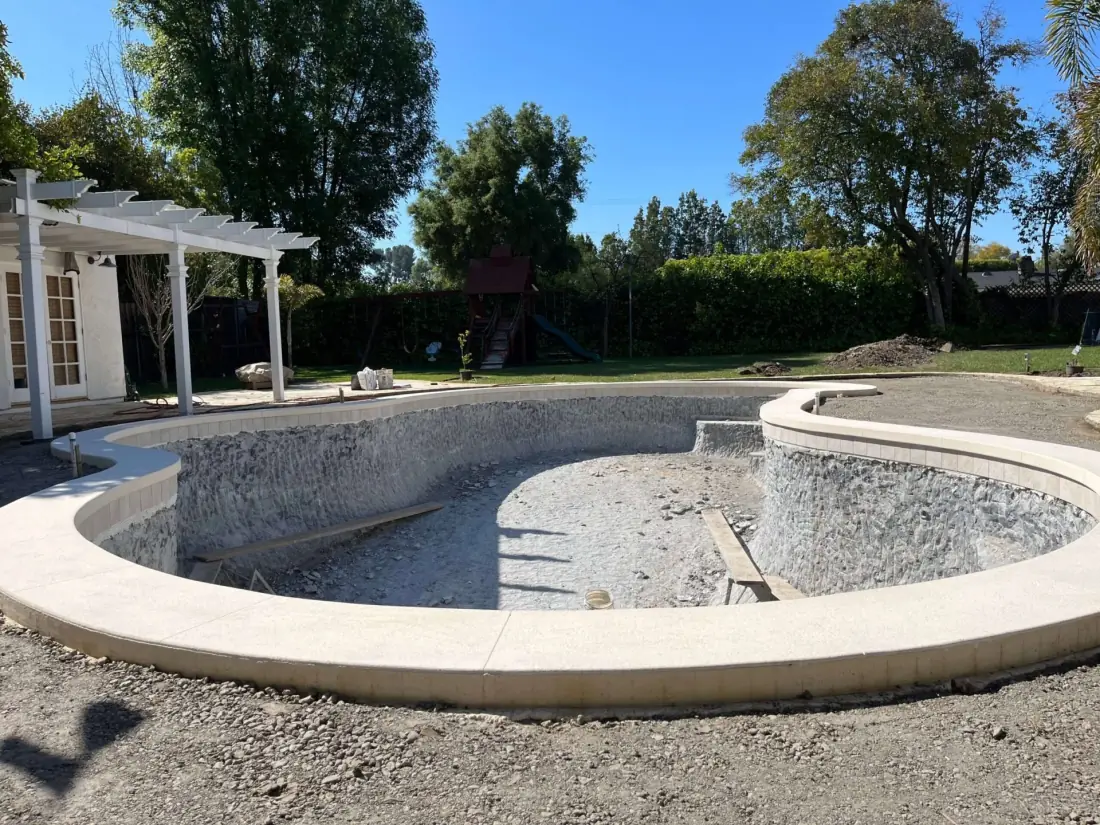
Pool coping replacement in Los Angeles swaps out the cap stones along the pool edge when they crack, loosen or pull away from the deck. It is priced by the linear foot plus the material, whether precast concrete, travertine, flagstone or brick, and is easiest to do alongside a resurfacing while the pool is drained.
Work is done by Ran Neuman, who owns Spear Pools, Inc. and brings 18 years of hands-on pool repair and construction experience. Licensed and insured under CSLB #1143895. Free written estimate, and most repairs are scheduled the same week.
“They were prompt, courteous and efficient. Their pool knowledge was thorough and 100% effective in resolving the issue with restoring the heat control.”
★★★★★ Michael K., Los Angeles, verified Yelp review
Signs Your Coping Needs Attention
Coping is the cap along the top edge of the pool. It seals the joint between the pool and the deck, so when it fails, water gets where it should not.
- Stones that rock or feel loose underfoot
- Cracked, chipped or missing caps
- A widening gap between the coping and the deck
- Crumbling mortar under or between the stones
- Cracks in the tile band directly below
Loose coping is also a safety problem. People sit on it, push off it and step on it wet, so a stone that shifts can cause a fall.
“They repaired parts rather than try to stick me with having to completely replace equipment. The gentleman that came out was highly professional and courteous.”
★★★★★ Joe R., Marina del Rey, verified Yelp review
Repair or Replace?
A few loose stones on sound coping get lifted, cleaned and reset in fresh mortar. That is a repair, and it keeps the original look.
Replacement makes sense when many stones are cracked or loose, when the old material is discontinued and patches would not match, or when a remodel is changing the look of the pool anyway. It is also the fix when the coping has failed because of the joint behind it, since resetting the same stones on a failing joint only buys a season. Coping often comes up while the pool is drained for a new interior finish, which is the easiest time to reset the edge.
Pool Coping Materials
The material decides how the edge looks, how hot it gets underfoot and how much care it needs.
| Coping material | Look | Underfoot | Good fit for |
|---|---|---|---|
| Precast concrete | Clean, uniform edge | Stays fairly cool | Most remodels, best value |
| Natural stone or travertine | Premium, natural texture | Stays coolest in sun | High-end remodels |
| Brick | Classic, traditional | Warms up in sun | Matching older homes |
| Poured-in-place concrete | Seamless, modern | Depends on finish | Contemporary designs |
Source: HomeAdvisor, 2026 cost data (coping replacement runs about $30 to $50 per linear foot). Your price depends on the pool, access and what we find on site.
- Travertine: natural stone that stays among the coolest underfoot in summer sun. It is porous, so it needs sealing, and salt pools call for extra care with natural stone.
- Precast concrete: uniform pieces in several colors and edge shapes. The best value for most remodels.
- Brick: a traditional look that matches many older Valley homes. It warms up more in the sun.
- Poured concrete: a seamless, modern edge formed in place.
The edge profile matters too. A bullnose edge is rounded and comfortable to sit on. A square or eased edge reads more modern.
Matching Coping to the Deck
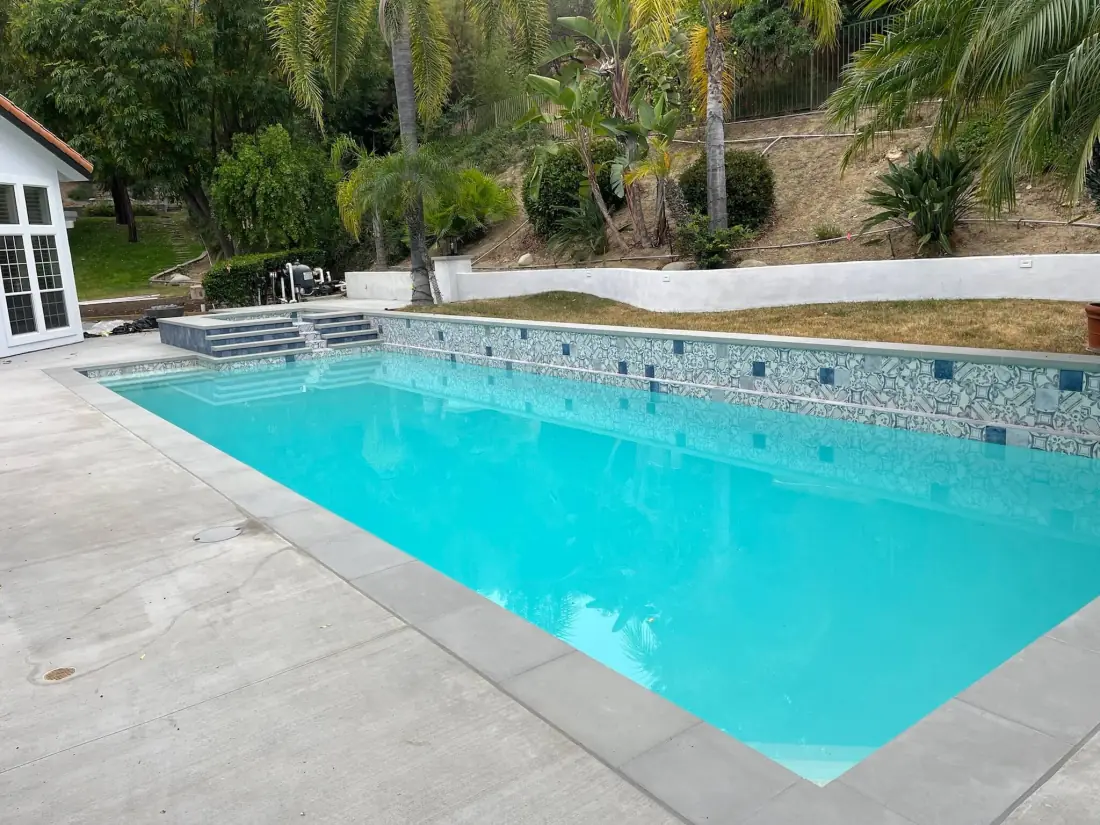
Coping sits between the tile and the deck, so it has to work with both. A light travertine edge against a gray concrete deck reads very differently from a matching stone throughout. When the deck is staying, we pick a coping color and texture that suits it. When both are being replaced, they are designed together. Our guide on remodel upgrades that hold value covers coping.
How Coping Replacement Works
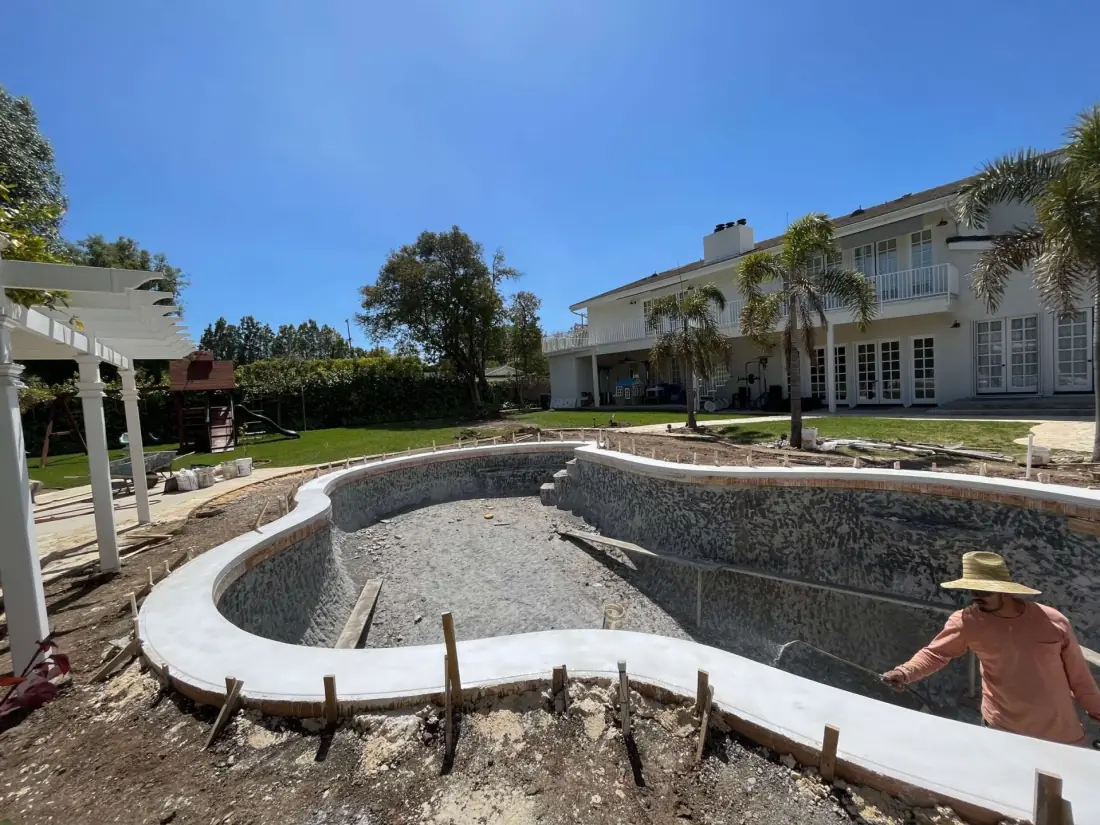
- Lower the water below the tile line so the edge can be worked on dry.
- Remove the old coping and the mortar bed beneath it.
- Check the bond beam, the thick top edge of the shell, and repair any damage.
- Set the new coping in a fresh mortar bed, level and evenly spaced.
- Seal the joint between the coping and the deck with a flexible expansion joint, so the two can move without cracking each other.
That last step is the one most often skipped, and a missing or failed expansion joint is the most common reason coping cracks and loosens in the first place.
What Pool Coping Costs
Coping replacement runs about $30 to $50 per linear foot, according to HomeAdvisor, with the material deciding where a job lands. For example, a 16 by 32 foot pool has about 96 feet of edge, which puts the coping at roughly $2,900 to $4,800 before any bond beam repairs.
“Wonderful pool service! I have been with Spear Aquachlor for over 20 years! Reasonable prices on pool service and repairs and excellent work!”
★★★★★ Stephen S., Encino, verified Yelp review
The waterline is the natural pairing, so see pool tile replacement. Replacing both in one project costs less than two separate jobs.
How Long Does Pool Coping Last?
The stone itself rarely wears out. Coping fails when the ground moves, when the joint to the deck breaks down, or when the mortar under it lets go. Well-set coping with a maintained expansion joint lasts until the next major renovation, while coping on a moving deck can fail within a few seasons.
The slab behind it is covered under pool deck repair, and the two are usually checked together.
Coping on Hillside Lots
Hillside and canyon lots shift more than flat ones, and coping is usually where that movement shows first. On slopes like those in Agoura Hills pool work, we look at drainage and the deck before quoting new coping, so the new edge is not sitting on the same problem.
At Spear, we handle pool coping replacement across Los Angeles, working out of the west San Fernando Valley and covering the Valley, the foothills and the Conejo Valley.
Every estimate starts with a free visit and a written price. See every city we cover.
Get a Free Pool Coping Estimate
Tell us which stones are loose or cracked and what the deck is doing. We measure the perimeter and quote the material in writing.
Free visit. Written price. No obligation.
Want a clean, solid edge around the pool? Call (818) 719-9059 and speak to Ran.