
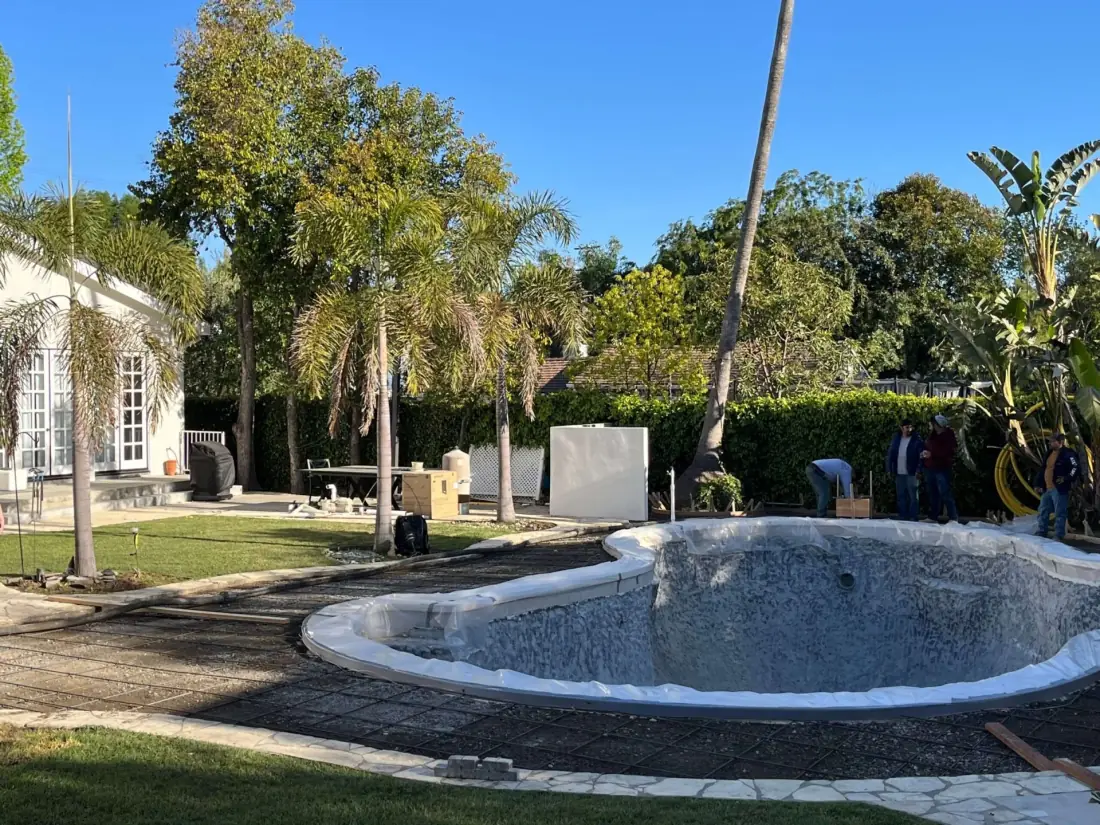
Pool re-piping in Los Angeles replaces the suction and return lines when patching stops making sense, usually on older pools where leaks keep coming back. In-ground leak repair runs $350 to $2,700 per HomeAdvisor’s 2026 data, and once a system needs repeat repairs, a full re-pipe often costs less than the next round of patches.
Work is done by Ran Neuman, who owns Spear Pools, Inc. and brings 18 years of hands-on pool repair and construction experience. Licensed and insured under CSLB #1143895. Free written estimate, and most repairs are scheduled the same week.
“Very knowledgeable pool equipment repair company. I’ve used them for over 15 years.”
★★★★★ Glen Heffernan, San Fernando Valley, verified Google review
Licensed & Insured · CSLB #1143895 (Spear Pools, Inc.) · Family-Owned, Serving the San Fernando Valley Since 1972 · Free Estimates · We Pull All Permits
Re-piping is a full replacement. For a single leak or a minor fix, see our pool plumbing repair service.
Repair or Re-Pipe?
Most leaks are a repair, not a re-pipe. One cracked fitting or a single broken section on otherwise healthy pipe gets fixed and the pool goes back to normal.
Re-piping makes sense when the system itself is failing:
- Leaks keep coming back in new places after each repair
- The lines are original galvanized steel or brittle early plastic
- Several lines fail a pressure test at the same time
- A remodel already has the deck torn up
- New equipment needs larger lines than the pool was built with
| Situation | Usual approach | Typical cost |
|---|---|---|
| One damaged line, the rest in good shape | Repair that section | $350 to $2,700 |
| Repeated leaks on old galvanized or early PVC | Re-pipe the affected runs | Quoted per project |
| Remodel with the deck already open | Re-pipe everything at once | Quoted with the remodel |
Source: HomeAdvisor, 2026 cost data (in-ground leak repair range). Your price depends on the pool, access and what we find on site.
If you have one known leak, start with a diagnosis and pool plumbing repair. We only recommend new lines when repairs have stopped paying off.
Why Older Valley Pools Need It
Many Valley pools went in during the 1950s and 1960s, and their original lines are now well past their expected life. Galvanized steel corrodes from the inside and narrows over time. Early plastic lines turn brittle and crack with ground movement.
Original postwar plumbing is why re-piping Van Nuys pools comes up so often. Older tracts further west bring us Woodland Hills re-pipes as well.
“Spear were professional from beginning to end. They came out the next day, when I said it was really urgent.”
★★★★★ Rupert Thorpe, Los Angeles, verified Yelp review
How the Work Is Done
- Test every line. Each suction and return line is pressure-tested to confirm which ones have failed and which can stay.
- Plan the routes. New lines are routed to reach the equipment pad with as few deck cuts as possible. Sometimes old lines are abandoned in place and new ones run a better path.
- Open and replace. Trenches are dug, the new pipe is laid and connected at the pool fittings and the pad.
- Pressure-test before backfill. Every new line holds pressure before it is buried.
- Restore. Trenches are backfilled and the deck is patched, or rebuilt if deck work is part of the project.
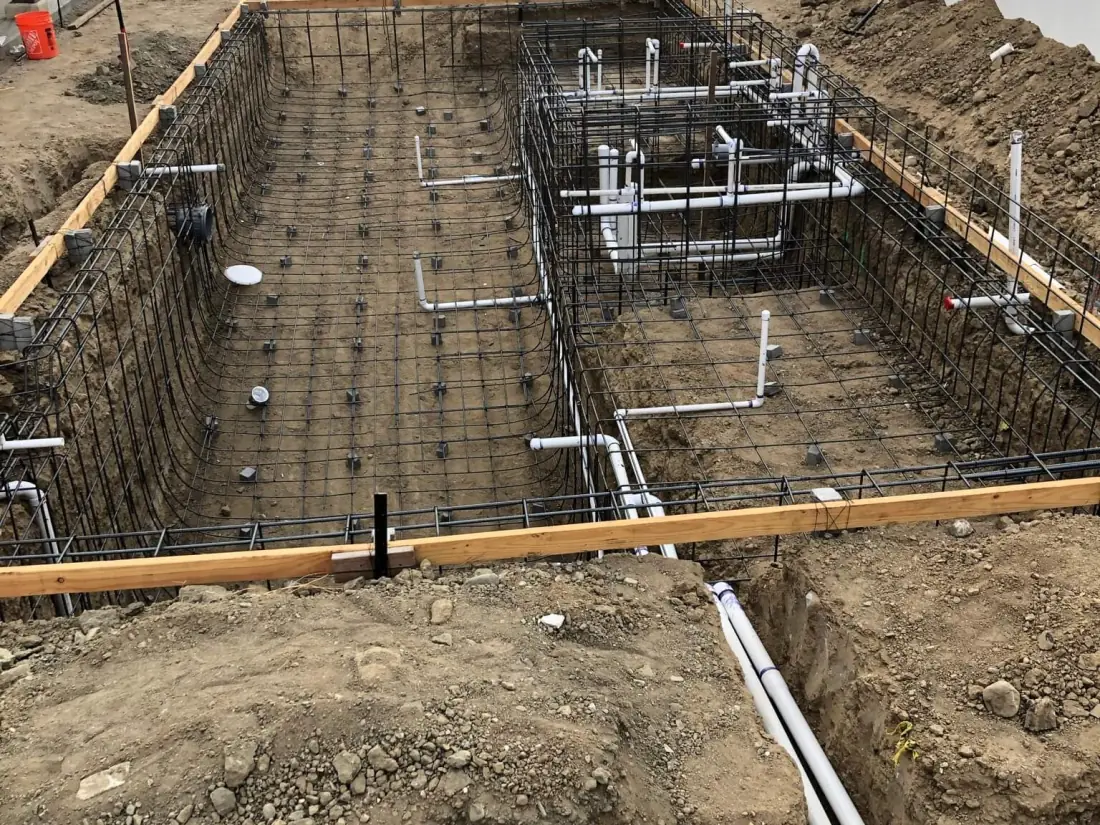
What the New Lines Are Made Of
Older pools used galvanized steel because it was the standard at the time. Today’s pool plumbing is rigid PVC rated for pressure, with flexible PVC only where a line has to bend around an obstacle. PVC does not rust, so it does not narrow from the inside the way old steel lines do.
We match the pipe size to the flow the equipment needs, which is often larger than what the pool was built with decades ago.
Better Flow, Lower Power Bills
Undersized or corroded lines make the pump work harder to move the same water. New pipe sized for today’s equipment lowers that resistance, which lets a variable-speed pump run slower and use less power. New lines pair well with a new equipment pad for that reason.
What to Expect During the Job
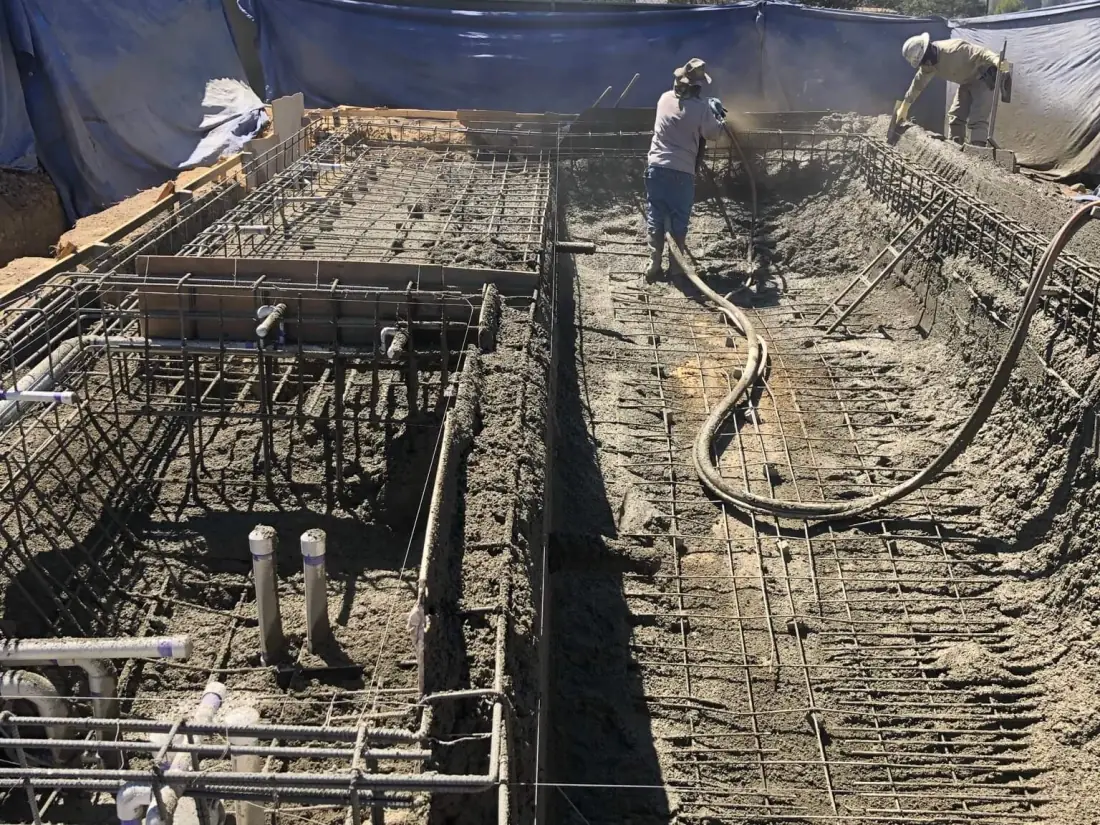
Many pools can stay full during the work, with the lines plugged at the pool while the new pipe goes in. Skimmer work may need the water lowered for a day. The pump is off while lines are disconnected, so plan on a few days without circulation. We keep the trenches as narrow as the work allows and restore the deck or planting afterward.
What Re-Piping Costs
Replacing the lines is quoted per project, because the price depends on how many lines are replaced, how far they run and what sits on top of them. Concrete and pavers cost more to open and restore than soil or planters.
For comparison, a single in-ground leak repair runs $350 to $2,700, according to HomeAdvisor’s 2026 data. When a pool needs that repair every year or two, replacing the failing lines often costs less over time.
“Richard is the tech and has always done a superb job, knows his stuff, and is an all around nice guy. Their prices are very fair.”
★★★★★ Jonathon K., Tarzana, verified Yelp review
The Best Time for New Lines
The cheapest time is during a pool renovation. When the deck is already coming out, the trenching and restoration costs are shared with the rest of the project instead of paid twice. If the old slab is due for replacement anyway, the new lines go in before the new pool deck is poured.
Ask any contractor to show you the pressure-test results for each line. That tells you which lines are failing and which can stay.
Before signing with anyone, run through nine questions for any pool contractor. A good contractor will explain which lines are failing and why.
Most re-pipes take a few days to a couple of weeks, depending on how many lines are replaced and how much deck has to be opened.
At Spear, we handle pool re-piping across Los Angeles, working out of the west San Fernando Valley and covering the Valley, the foothills and the Conejo Valley. See every city on our service list.
Get a Free Pool Re-Piping Estimate
Tell us how often the leaks come back and how old the pool is. We trace the system first and only quote a re-pipe when patching no longer pays.
Free visit. Written price. No obligation.
Tired of paying for the same leak twice? Call (818) 719-9059 and speak to Ran.