
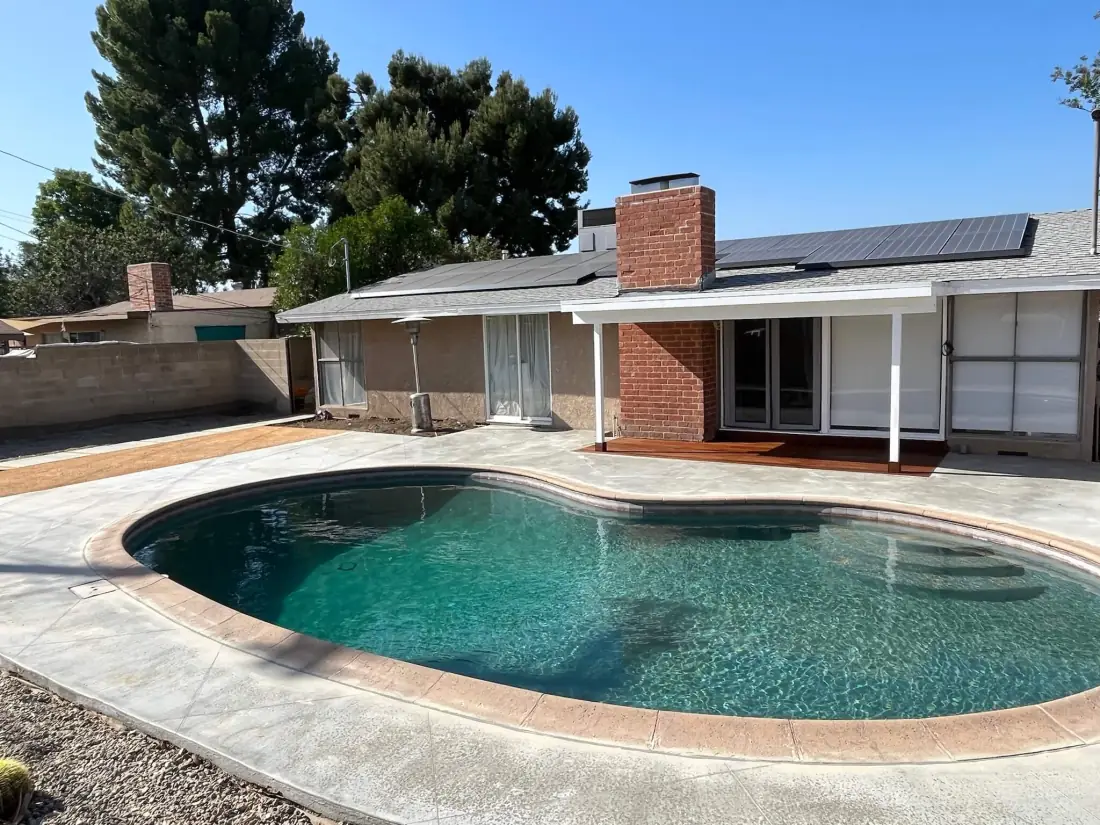
Pool deck repair in Los Angeles covers cracked or lifting concrete, failed expansion joints, loose coping and drainage that sends water toward the pool. Deck work is priced by square footage and finish rather than by the pool, and a sound slab can usually take a new surface instead of a full tear-out.
Work is done by Ran Neuman, who owns Spear Pools, Inc. and brings 18 years of hands-on pool repair and construction experience. Licensed and insured under CSLB #1143895. Free written estimate, and most repairs are scheduled the same week.
“The aesthetic finish on my 50 year old pool and decking was stunning, all the functions upgraded, the drainage gives us a peace of mind.”
★★★★★ Howard Teba, San Fernando Valley, verified Google review
Signs Your Deck Needs Work
A pool deck takes sun, water, chemicals and bare feet every day. These are the signs it has started to fail:
- Cracks that keep widening or run through the slab
- Slabs that have lifted or sunk, leaving trip edges
- Water that pools on the deck after rain or splashing
- Water that runs toward the house or back into the pool
- A gap opening between the deck and the coping
- A worn, rough or slippery surface
Trip edges and slick spots matter more here than anywhere else in the yard, because people walk on the deck barefoot and wet.
“Professional, friendly, and excellent service.”
★★★★★ Beverly Pine, San Fernando Valley, verified Google review
Resurface or Replace the Deck?
The slab underneath decides the answer. A sound slab with surface wear, stains or small cracks can take a new surface. A slab that has heaved, sunk or cracked all the way through needs to come out.
| Option | Typical cost | Best when |
|---|---|---|
| Resurface the existing deck | $2,250 to $3,750 | The slab is sound, with surface wear, stains or small cracks |
| Tear out and pour new concrete | $6,000 to $15,000 | The slab has heaved, sunk or cracked through, or drains toward the house |
Source: HomeAdvisor, 2026 cost data. Your price depends on the pool, access and what we find on site.
Resurfacing over a moving slab is money wasted, because the new surface cracks along the old breaks. We check the slab first so you only pay for the fix that will last. Past customers describe the results in their Spear reviews.
Pool Deck Drainage
Drainage is the part of a deck most people never think about until it fails. The deck has to shed water away from both the pool and the house.
When it does not, standing water stains the surface, turns slippery and seeps under the slab, where it softens the base and lets the concrete settle. Water running toward the pool carries dirt and debris in with it. Deck drains also clog with leaves and silt, so a drain that worked when it was poured can quietly stop working years later. If the pool is also losing water, have the buried pool lines checked before new concrete goes over them.
We fix drainage by clearing or adding deck drains, correcting the slope during a replacement, and making sure downspouts and planters are not sending water back onto the deck. On a replacement, drainage is designed in from the start instead of patched afterward.
Resurfacing Options
- Textured coatings: a sprayed and troweled finish in a light color, which stays cooler underfoot and adds grip.
- Stamped overlays: a thin new layer patterned to look like stone or tile.
- Sealers and stains: a refresh for a slab that is sound and only faded.
When the slab is being replaced, pavers and natural stone such as travertine become options too, and they run cooler than plain concrete in full sun.
How a New Deck Is Built
- Demolish the old slab and haul it away.
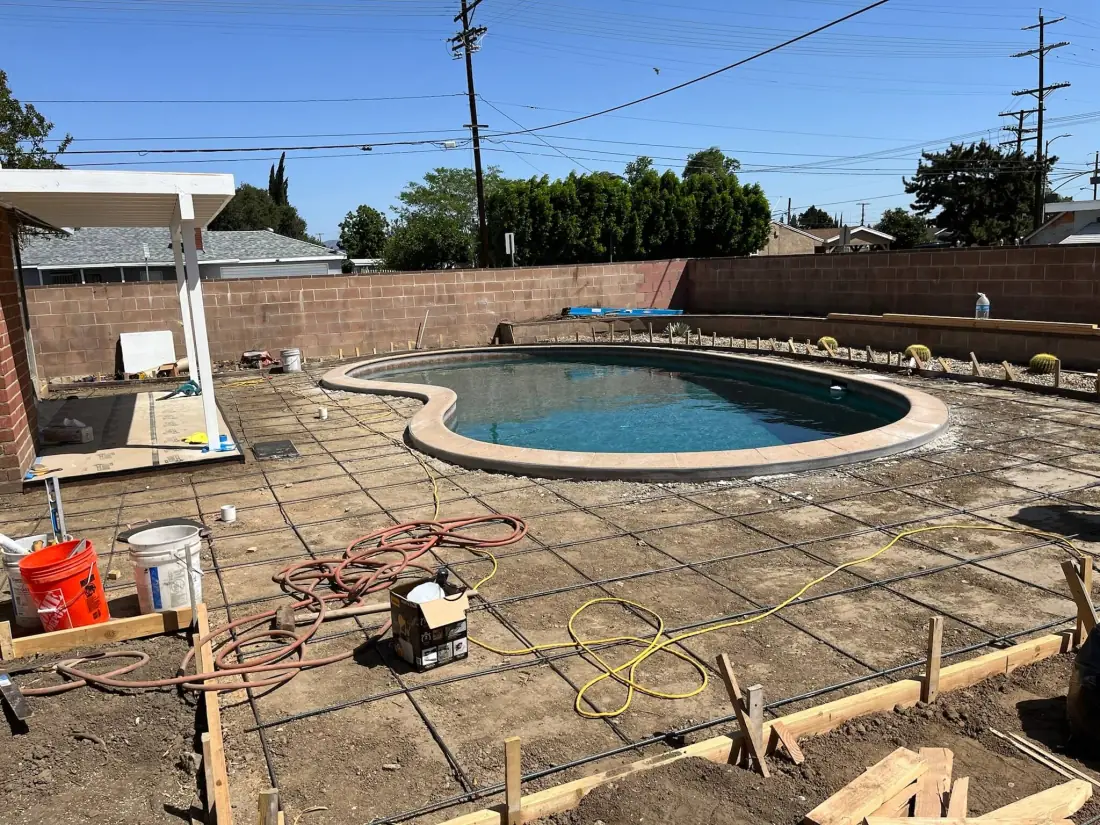
- Prepare the base by grading and compacting the soil, with the slope set for drainage.
- Form and reinforce with steel so the new slab resists cracking.
- Pour and finish the concrete, with control joints to guide where it cracks.
- Seal the coping joint with a flexible expansion joint so the deck and pool edge can move independently.
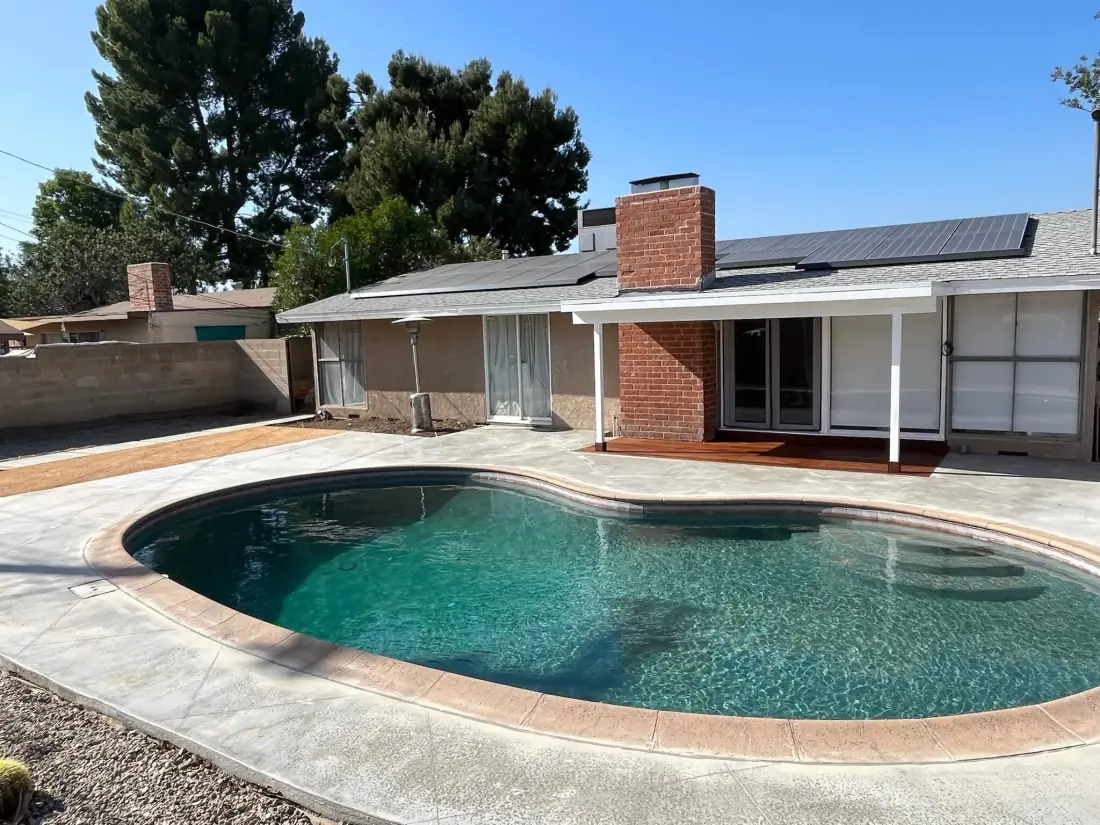
Loose edge stones are covered under coping replacement, which often goes in during the same project.
Keeping the Deck Cool
Plain concrete in full Valley sun gets hot enough to hurt bare feet by midafternoon. Light colors help, and textured coatings made for pool decks reflect more heat than a smooth gray slab. Travertine and light pavers stay cooler still, which is why they are popular on replacements.
Keeping a Deck in Shape
- Clear the deck drains before the rainy season.
- Reseal the expansion joint at the coping when it cracks or pulls away.
- Rinse off pool chemicals and salt that splash onto the surface.
- Fix small cracks early, before water gets under the slab.
What Deck Work Costs
Resurfacing an existing concrete deck runs $2,250 to $3,750, while tearing it out and pouring new concrete runs $6,000 to $15,000, according to HomeAdvisor. The size of the deck, the finish and how much drainage work is needed move the number most.
“Always on time. Professional and courteous. Best knowledge and a great partnership for my business.”
★★★★★ Gary R., Chatsworth, verified Yelp review
Flat Lots and Hillside Lots
Los Angeles decks fail in predictable ways. On flat lots, long summers bake the slab and age takes out the joints. On hillside lots, the ground shifts underneath and cracks the concrete from below.
Hillside soil is one of the conditions behind pool deck repair in West Hills, where slopes meet older tract decks. An open deck is also the moment to add fire bowls and water features.
At Spear, we handle pool deck repair across Los Angeles, working out of the west San Fernando Valley and covering the Valley, the foothills and the Conejo Valley.
Every deck estimate starts with a free visit and a written price. See every area we cover.
Get a Free Pool Deck Estimate
Tell us what the deck is doing and roughly how big the patio is. We check the base before quoting, so you only pay to tear out what has actually failed. Our guide on remodel work that adds value covers decks.
Free visit. Written price. No obligation.
Want a deck that drains and looks right? Call (818) 719-9059 and speak to Ran.