
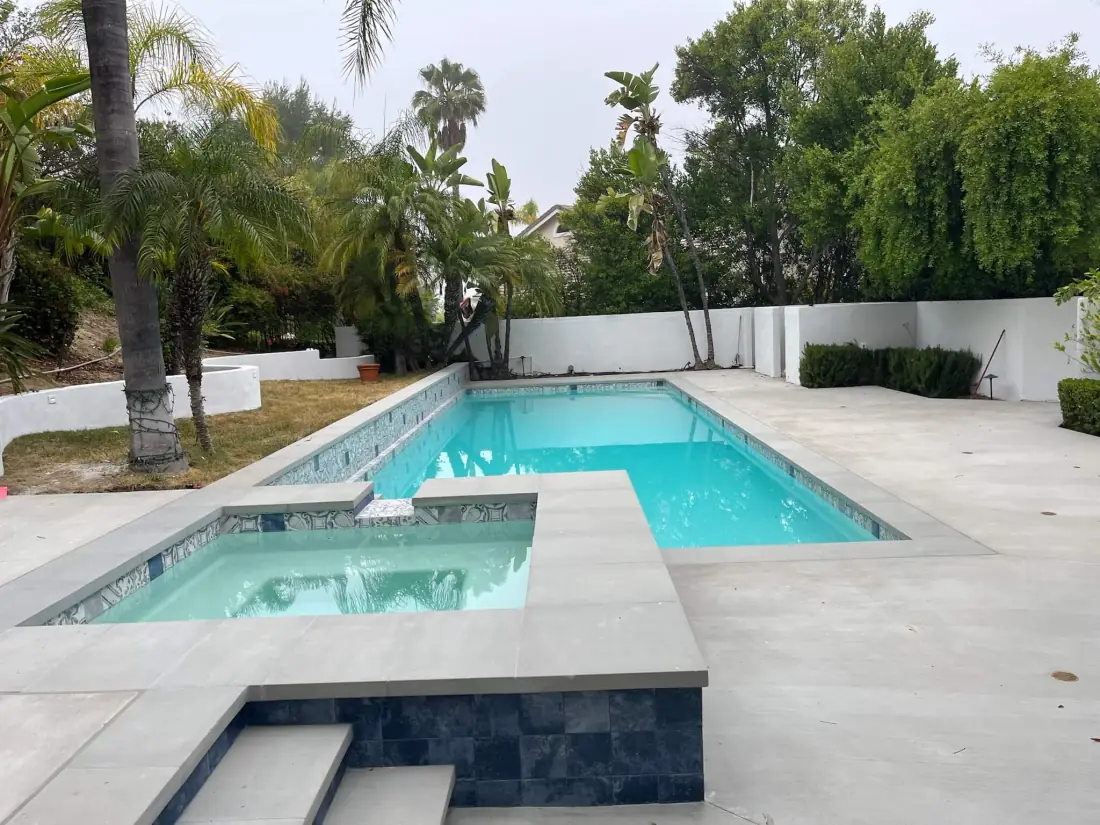
Pool equipment repair in Los Angeles covers the pump, filter, heater, automation and the plumbing that connects them. Most repairs run $243 to $1,212, with pump motor work at $50 to $300 and heater repair at $160 to $730 per HomeAdvisor’s 2026 data. We diagnose first, then quote in writing before anything is replaced.
Work is done by Ran Neuman, who owns Spear Pools, Inc. and brings 18 years of hands-on pool repair and construction experience. Licensed and insured under CSLB #1143895. Free written estimate, and most repairs are scheduled the same week.
“Damian has been repairing out pool equipment for many years. He is the best.”
★★★★★ Victor Kenton, San Fernando Valley, verified Google review
What Happens on a Repair Visit
Most calls start with a symptom. The pump hums but moves no water, the heater clicks and never lights, or the controller shows an error code. The loudest part is not always the broken one, so the first job is finding the cause.
We check the whole equipment pad, not just the part you called about:
- Pump and motor: noise, priming, the shaft seal and how hard the motor is working.
- Filter: the pressure reading, the tank, and the cartridges, grids or sand inside.
- Heater: the ignition sequence, pressure switch, sensors and gas supply.
- Controls: the automation panel, timers, relays and any stored error codes.
- Plumbing at the pad: unions, valves and fittings that leak water or pull in air.
You get a written price before any part is ordered. Many repairs are finished on the first visit, because common parts ride on the truck.
Equipment We Repair
Most pads in the Valley carry some mix of the same equipment, often from different decades. We work on all of it:
- Single-speed, two-speed and variable-speed pumps
- Cartridge, sand and DE filters
- Gas heaters and electric heat pumps
- Salt chlorinators and their cells
- Automation systems, including Pentair controls and Jandy iAquaLink
- Valves, actuators, timers and the plumbing between them
Older equipment is not a reason to give up on it. At Spear, if a replacement part still exists, we find it before we suggest buying new.
Pump and Motor Repair
The pump moves every gallon through the filter and heater, so a failing pump shows up fast as cloudy water and weak returns.
- Screeching or grinding: usually worn motor bearings.
- Water dripping under the pump: a failed shaft seal, a small part that protects the motor.
- Pump will not prime or the basket fills with air: a suction-side leak or a cracked lid O-ring.
- Motor hums but will not start: often a capacitor or an electrical fault.
Motor repairs run $50 to $300, according to HomeAdvisor’s 2026 data. A full pump replacement runs $700 to $4,000, which is why we price the repair first.
Filter Repair
A filter that is not doing its job makes the whole system work harder. Watch the pressure gauge: a reading well above its clean baseline means the media is clogged or failing.
Cartridges and DE grids wear out and get replaced. Sand gets changed when it clumps or channels. A cracked filter tank is a replacement, not a repair, because a pressurized tank that splits can injure someone standing next to it.
Pool Heater Repair
Gas heaters and heat pumps fail in a handful of predictable ways: no ignition, a tripped pressure or high-limit switch, a bad sensor, or a sooted burner tray. Most heater repairs cost $160 to $730, according to HomeAdvisor.
“Called Spear, talked to a gentleman named Damion. Set up an appointment, he was on time, tooled around for 25 minutes, fixed the heater for $160.”
★★★★★ Jay D., Santa Monica, verified Yelp review
Before blaming the heater, we confirm the pump is moving enough water through it. Low flow from a dirty filter shuts a heater down to protect itself, and cleaning the filter fixes it.
Automation and Control Repair
Automation runs the pump schedule, heater, lights and valves from one panel or a phone app. When it fails, everything it controls stops with it.
We troubleshoot the relays, actuators, sensors and communication wiring, and we reprogram schedules after a repair. Wiring problems behind the controller overlap with pool electrical work, which we also handle.
Leaks at the Equipment Pad
Water on the ground near the pad usually comes from a cracked union, a worn valve O-ring, a filter drain plug or the pump seal. Those are quick fixes. Air in the pump basket points to a leak on the suction side, which can be harder to find.
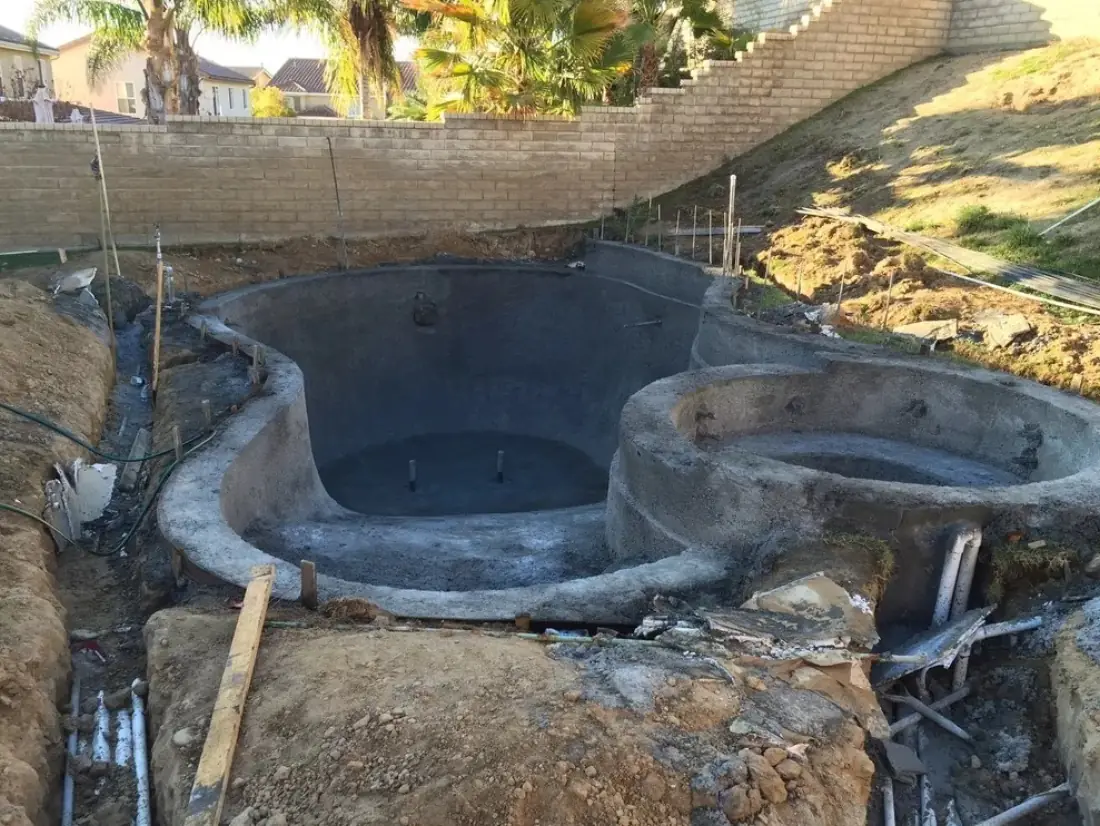
If the water loss is coming from buried lines rather than the pad, that is a job for pool plumbing repair and leak location. Lines that leak again and again are usually due for full pool re-piping.
Repair or Replace?
We repair first when the repair makes sense. Replacement only wins when the numbers or the safety say so. Other owners describe how that worked out in our customer reviews.
| Situation | Usually | Why |
|---|---|---|
| One failed part on sound equipment | Repair | A seal, capacitor or sensor costs a fraction of a new unit |
| Old single-speed pump with a failed motor | Often replace | A variable-speed pump uses much less power, so the upgrade can pay back |
| Cracked filter tank | Replace | A pressurized tank cannot be safely patched |
| Heater with a failed heat exchanger | Usually replace | The part can cost close to a new heater |
| Older equipment with hard-to-find parts | Repair if parts exist | We look for the part before recommending new |
Replacement costs from HomeAdvisor, 2026: pumps $700 to $4,000, heaters $1,864 to $4,348 installed. Your price depends on the equipment and what we find on site.
“They repaired parts rather than try to stick me with having to completely replace equipment. The gentleman that came out was highly professional and courteous.”
★★★★★ Joe R., Marina del Rey, verified Yelp review
When a customer can choose between new and refurbished equipment, we lay out both prices. Whoever you hire, our list of questions to ask before hiring a pool company helps you compare quotes.
When Repair Is Not the Right Call
Sometimes the honest answer is to stop repairing. If the same pump has failed three times, or the repair quote is close to half the price of a new unit, replacing it usually costs less over the next few years.
We are an authorized Pentair warranty partner, so if newer Pentair equipment fails under warranty, we help you file the claim instead of paying for a repair the manufacturer should cover.
We handle pool equipment repair across Los Angeles, working out of the west San Fernando Valley and covering the Valley, the foothills and the Conejo Valley. See every city in our coverage.
Get a Free Pool Equipment Repair Estimate
Tell us what the equipment is doing. Estimates are free, and most repairs are scheduled the same week. When replacement wins, see installing new pool equipment.
Free visit. Written price. No obligation.
Ready to get the pad running again? Call (818) 719-9059 and speak to Ran.