
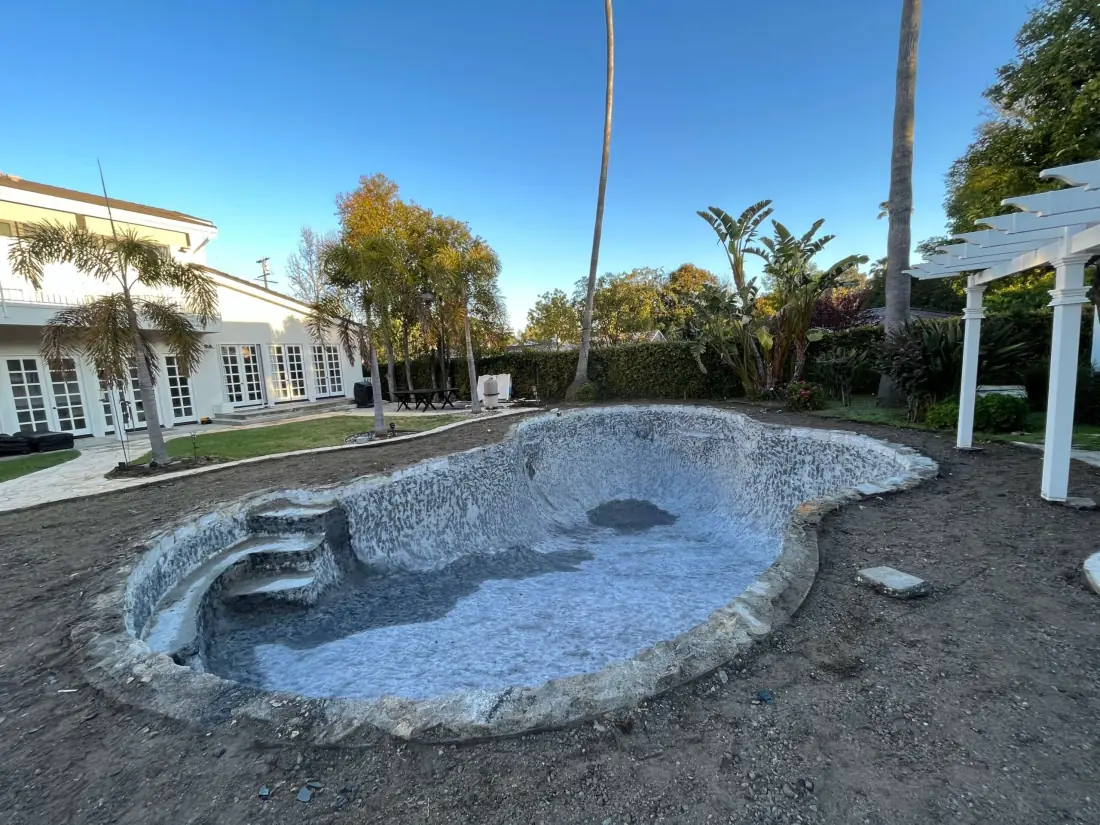
Pool plastering in Los Angeles replaces the thin cement finish that seals the shell and gives the water its color. A full replaster falls inside HomeAdvisor’s 2026 resurfacing range of $6,000 to $15,000, averaging about $11,000, and standard white plaster lasts 5 to 10 years before it needs doing again.
Work is done by Ran Neuman, who owns Spear Pools, Inc. and brings 18 years of hands-on pool repair and construction experience. Licensed and insured under CSLB #1143895. Free written estimate, and most repairs are scheduled the same week.
“Thank you Spear Pools for over 25 years of reliable service.”
★★★★★ Bret Ivison, San Fernando Valley, verified Google review
Licensed & Insured · CSLB #1143895 (Spear Pools, Inc.) · Family-Owned, Serving the San Fernando Valley Since 1972 · Free Estimates · We Pull All Permits
Plaster is one of several pool interior finishes. For the full range of options, see our pool resurfacing service.
What Pool Plaster Is
Standard pool plaster is a blend of white cement and marble dust troweled over the concrete shell. It seals the shell so it holds water, gives the pool its color, and creates the smooth surface you swim against.
White plaster reads as bright turquoise once the pool is full. Colored plaster, from light gray to dark blue, gives deeper water tones. It is the most affordable interior finish, which is why most Valley pools were built with it.
Colored plaster naturally shows some shading and mottling as it cures. That variation is part of the look, so it helps to see finished pools in the color you are considering.
Signs Your Pool Needs Replastering
- Rough spots that scratch feet or snag swimsuits
- Gray concrete showing through on steps, benches and corners
- Chalky, etched areas or stains that return after cleaning
- Patches that sound hollow when tapped or have started to flake
- Water that is hard to keep balanced because the surface is porous
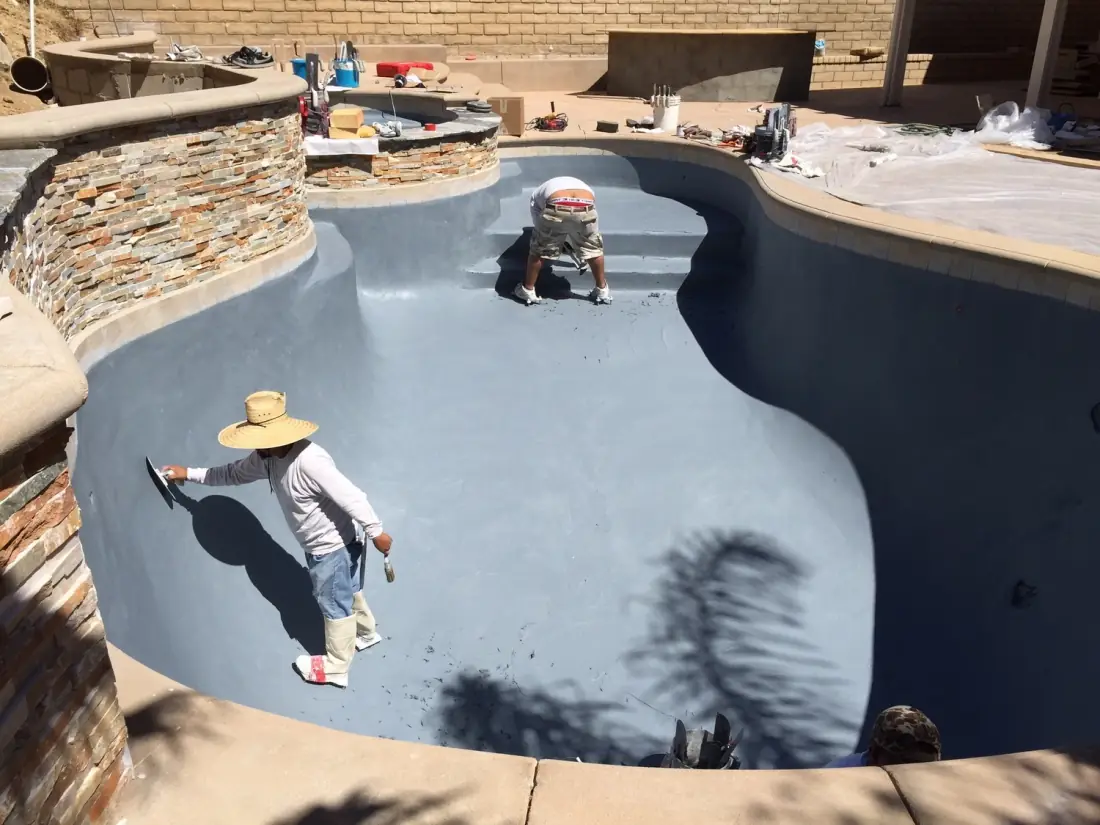
Plaster usually lasts 5 to 10 years. Aggressive water chemistry shortens that, and a well-balanced pool lands at the long end.
How We Replaster a Pool
- Drain. The pool is drained following local rules on where the water can go.
- Chip and sound. Loose and delaminated plaster is chipped out, and the whole surface is tapped to find hollow spots.
- Repair. Cracks, fittings and damaged areas are fixed so the new coat has a sound base.
- Prepare the surface. The shell is cleaned and prepared so the new plaster bonds instead of peeling.
- Plaster. The new finish is applied and troweled smooth in one continuous day.
- Fill and start up. The pool fills without stopping, then the water is balanced and brushed daily while the plaster cures.
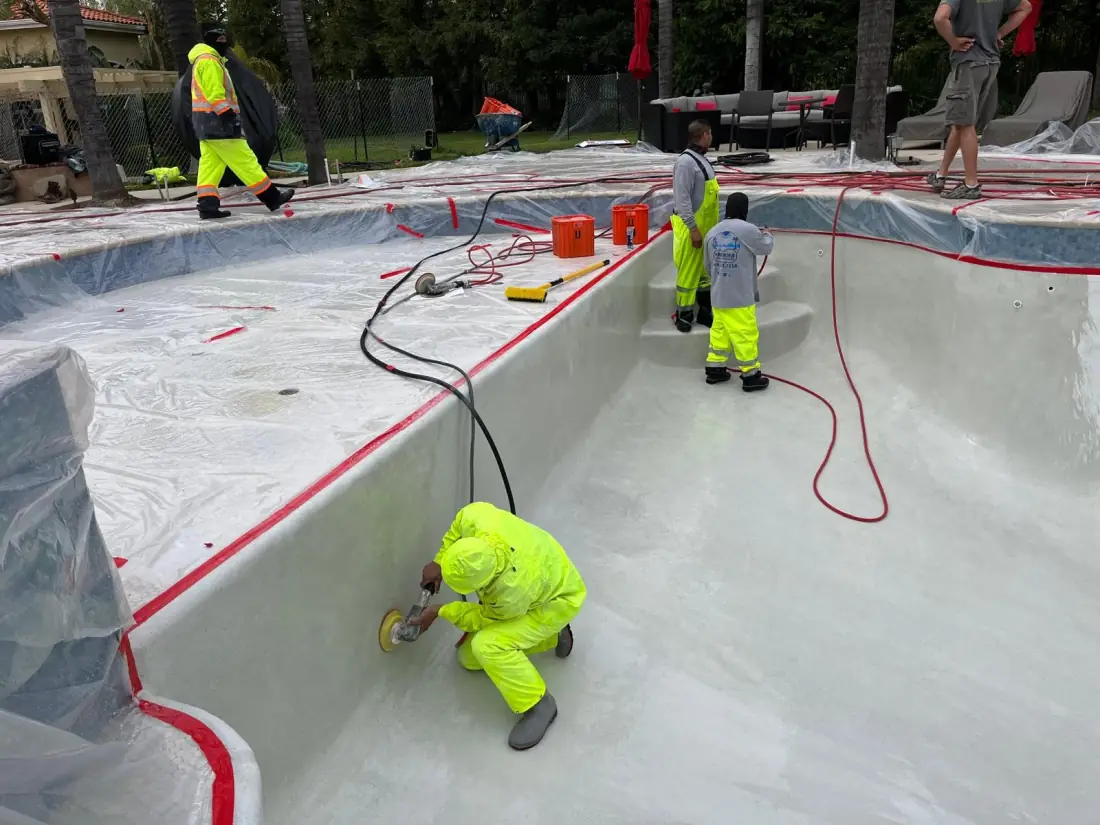
Skipping the chip-out is the most common shortcut in plastering. New plaster over old plaster that has lost its bond fails early, so we remove what is loose before we start.
“The techs were knowledgeable and did the job quickly and cleanly.”
★★★★★ Alvin Brown, Los Angeles, verified Google review
Plaster, Quartz or Pebble?
Plaster is the starting point, and two longer-lasting finishes build on it.
| Finish | Typical lifespan |
|---|---|
| Standard plaster | 5 to 10 years |
| Quartz | 15 to 20 years |
| Pebble | 20+ years |
Source: HomeAdvisor; Pebble Technology International (pebble). Your price depends on the pool, access and what we find on site.
Plaster makes sense on a budget or if you plan to sell within a few years. Quartz and pebble cost more up front and last much longer, so they often cost less per year on a pool you plan to keep.
What Replastering Costs
A full replaster falls within HomeAdvisor’s 2026 resurfacing range of $6,000 to $15,000, which averages about $11,000 across all finishes. Plaster sits at the low end of that range.
The real surface area matters more than gallons, since steps, benches and spas all add square footage. Hollow spots found after chipping and any tile work done at the same time add to the total. For numbers by size, read our guide to replaster pricing in Los Angeles. A new Baja shelf is also cheapest to add while the pool is empty for plastering.
“I have been using Spear for over 20 years and they never fail to resolve my problems.”
★★★★★ Jerry O., San Fernando Valley, verified Google review
Permits and Timing
In the City of Los Angeles, re-plastering an existing pool runs as an express LADBS permit with no full plan check. Other cities and unincorporated county areas have their own rules, and we handle the permit either way.
Spring and fall are the best seasons, because mild weather lets the plaster cure evenly. Plan about five working days on site, according to HomeAdvisor, plus filling and startup. The waterline is easiest to redo while drained, so see waterline tile replacement options before you book.
Caring for New Plaster
- Brush the whole pool daily for the first couple of weeks to clear plaster dust.
- Keep pH, alkalinity and calcium in range while the surface cures.
- Wait to add salt or run an automatic cleaner until the plaster has cured.
- Test the water often during the first month, when it changes fastest.
Where We Plaster
Most plastering runs through the West Valley, including replastering in Reseda, close to our west Valley base. Plastering is also the most requested job on Calabasas pool plastering projects.
At Spear, we handle pool plaster work across Los Angeles, working out of the west San Fernando Valley and covering the Valley, the foothills and the Conejo Valley. See every location we serve.
Get a Free Pool Plastering Estimate
Tell us how old the plaster is and what it looks like now. We measure the real surface area and quote the finish in writing.
Free visit. Written price. No obligation.
Ready for a smooth, bright finish again? Call (818) 719-9059 and speak to Ran.